By Liliana Shadlow · Staff Writer
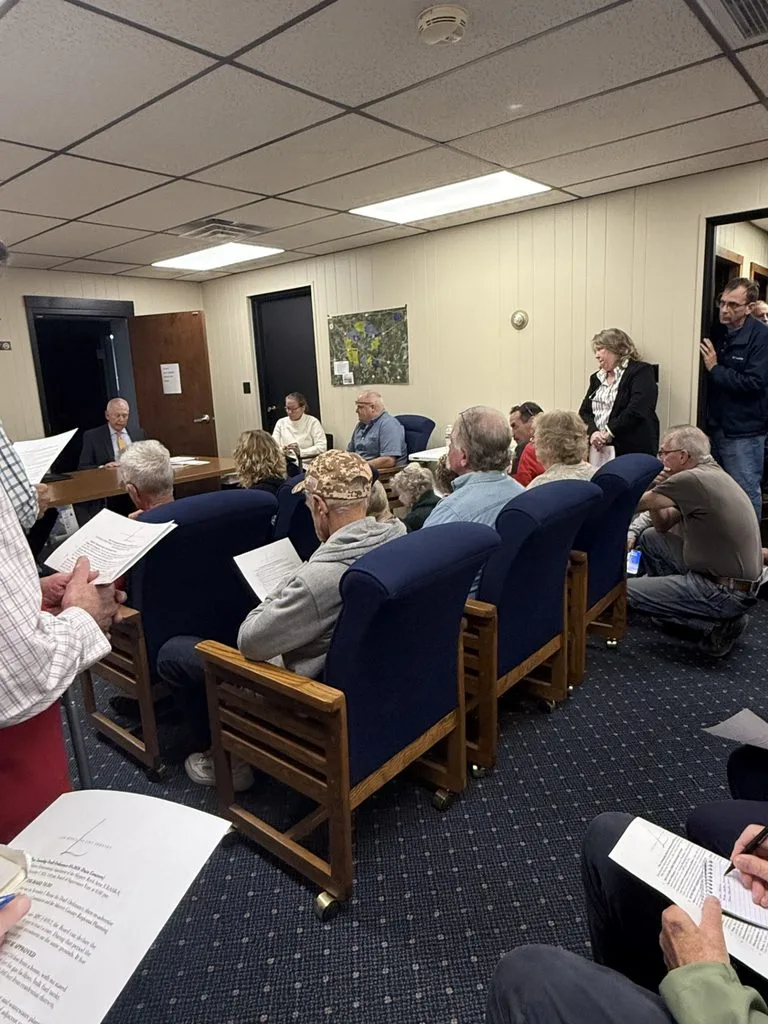
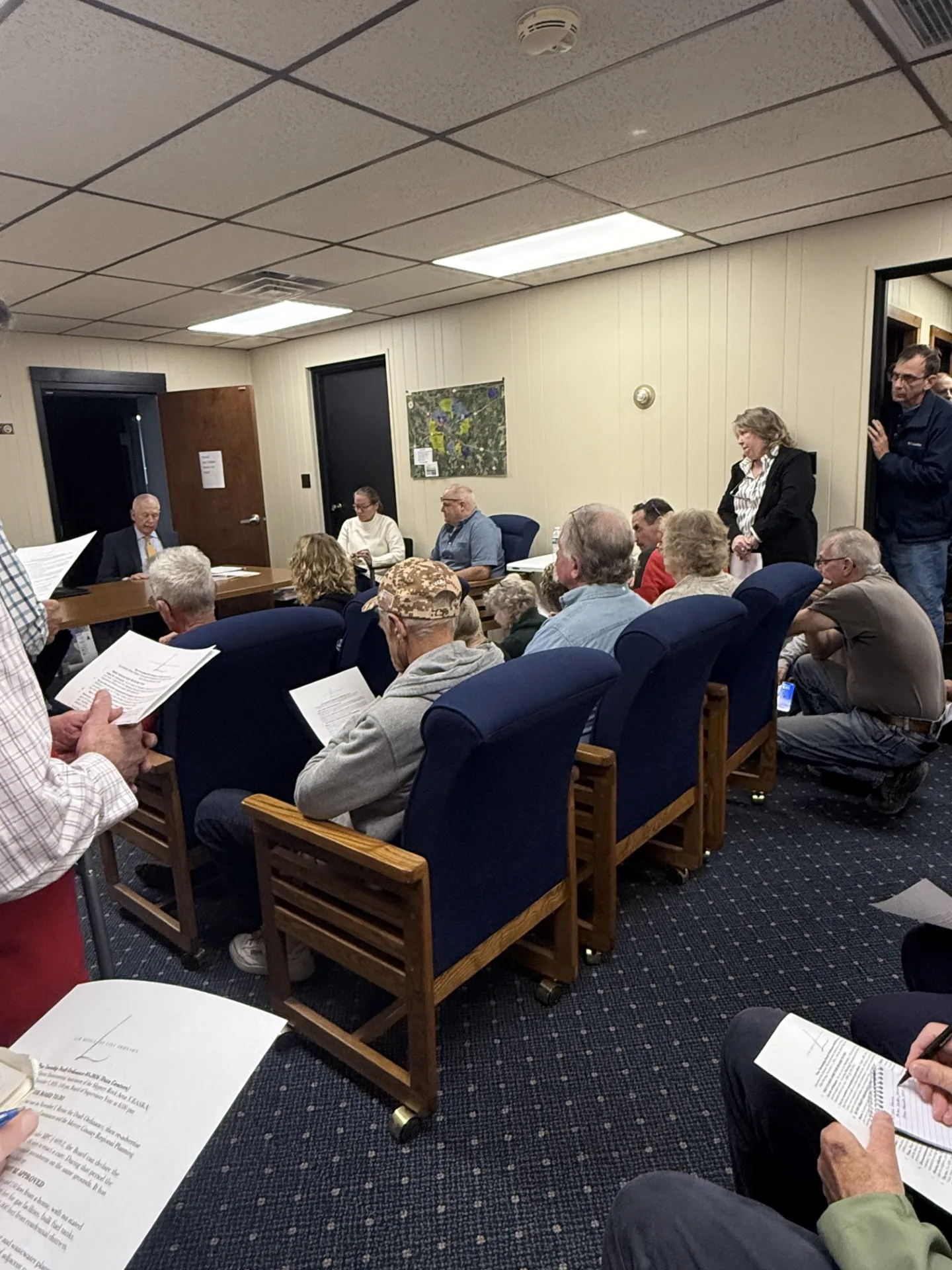
Mercer County residents, including Grove City College faculty, packed the Pine Township Municipal Building for a public hearing on proposed data center logistics Monday.
The discussion drew a wide range of opinions, as the hearing covered how and where data centers could be built in Mercer County.
With more than 80 people in attendance, the municipal building was filled beyond capacity, and many, hoping to hear exclusive details from the township supervisors and fellow community members, formed a line outside the door. Most attendees expressed strong disapproval of data centers due to environmental concerns, water and noise pollution, energy use, property infringements and tax increases.
For many, securing sufficient funds to prevent a data center disaster was a central concern. Attendees doubted that local fire departments were supplied with sufficient fire-suppressing technology to handle a data center fire.
Fire prevention, however, was not the only factor heavily discussed.
Lisa Johnson, an attorney representing multiple people within the township, said, “The power generation facilities (in terms of) the size and the air emissions will be unprecedented in the Commonwealth (of Pennsylvania).”
Attendee Marilyn Goodrich questioned who would have to deal with these effects and pick up the bill when it came.
“Which entity, the developer or the local taxpayers, is supposed to be financially responsible for covering 100% of this specialized hazardous material equipment?”
Others echoed her concerns, saying increased taxes, additional expenses and lack of certainty surrounding the sources of data center funding were reasons to proceed with caution in the data center realm.
Biblical studies and sociology professor George Campbell said he has reservations about data centers because of the electricity and water they consume, saying data centers should “supply their own power and water, or at least have mitigation strategies in place to replace what they use.”
Campbell said the views of those who attended the event seemed to be a good representation of the views of the community.
“I didn’t sense everybody was opposed to it,” Campbell said. “I got the sense that people were concerned about a lot of particulars and they want to make sure we know what we are getting into.”
Catherine Trammell, a retired French professor at Grove City College, also attended and expressed frustration at the lack of transparency surrounding who receives the financial benefits of data centers.
“(It’s frustrating) how money comes in and overwhelms small communities that don’t have the financial resources to fight back,” Trammell said.
The hearing lasted an hour and concluded with an affirmative vote on the proposed ordinance by the township supervisors. Commissioned in March, the ordinance had gone through several drafts by the planning commission before this vote.
Back on campus, faculty and students had a wide range of opinions on data centers.
Caleb Verbois, a constitutional law professor, touched on the legal implications of AI data centers.
“The reality is, how you do things affects other people,” he said. “Local civic authorities have the obligation to ensure residents and businesses treat their residents well.”
Marketing professor Richard Kocur agreed and spoke to the environmental ethics of data centers.
“Legal environmental requirements set the floor, and from an ethical standpoint, we have a responsibility to steward our resources and steward the environment,” Kocur said. “If that means spending extra money to mitigate issues, we do it.”
Business analytics professor Ryan Miller maintained a hopeful perspective, emphasizing that concerns surrounding AI and data centers will tone down with time.
“Like all other technologies, (AI) will physically shrink and grow more efficient over time. That will mitigate the impact,” Miller said. “However, there needs to be a cost to the negative externalities of data centers so there is incentive to change.”
Students had split opinions, with some more optimistic than others about data centers within communities.
“Data centers can be good, but you have to listen to the people,” Julia Drake, a senior international business major, said. “You’re not going to get anywhere doing things people don’t want.”
“Overall, data centers are good because they improve local infrastructure,” freshman entrepreneurship major Judah Lindsay said. “We could get (much) better energy infrastructure with the incoming of the data centers, which would then bring energy costs down for residents.”
For Pine Township residents, local data centers are becoming more of a reality than a debate topic. How the township will approach applications for data centers in the area is still unknown, but for now, residents and curious bystanders can view the online Mercer County ordinances for more information.