Dancers strike gold
By Randall Elvin · Entertainment Editor
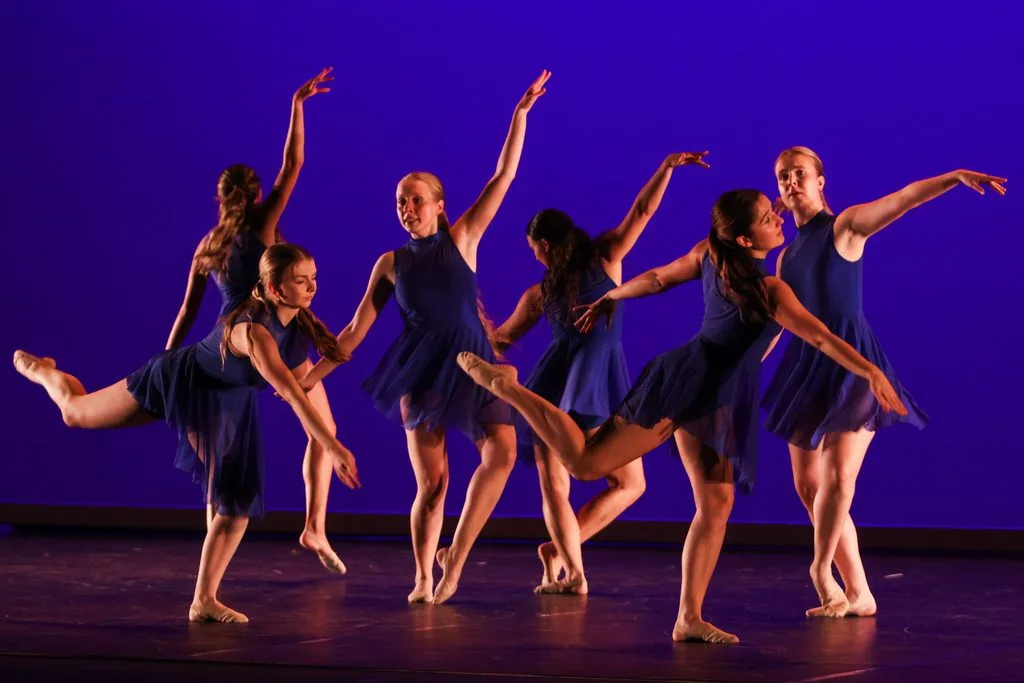
What does a gold dance look like? What sound goes with opal? How do you portray a story through a dance using marble? Orchesis 2026 answers these questions and dives into its fall production theme “Forged in Gold, Set in Stone.”
Each dance is based on a unique element: gold, obsidian, turquoise, iron, sapphire, marble, silver and opal. Each carries its own color, vibe and identity. Orchesis uses music, costumes, lighting, and movement to give each stone its own personality. These eight elements inspire the first half of the evening.
In case you missed “On the Radio” in the spring or last fall’s “Metamorphosis”, Orchesis is Grove City’s student-led dance troupe. It organizes two productions each academic year, which students can participate in as dancers and choreographers. It brings together a variety of dance backgrounds and styles for the campus community.
This semester’s production opens with a cheerful introduction to the audience, dedicated to the element gold. The dance is set to Harry Styles’ song “Golden”, which provides an uplifting atmosphere. Their brown and white costumes tie it all together, answering what a golden dance looks and feels like.
The second dance considerably changes the mood. Obsidian is commonly associated with depth and darkness. Adele’s “Rolling in the Deep” was easily the choice that connects the best with their associated element. The red lighting, occasional gray silhouettes, and powerful vocals complement one another exceptionally well. As the stage lights dim, the dancers become outlined against the darker surroundings and strong red background, giving a striking look. Once you count the dancers and get only six, you are sure to be confused. The performers deliver excellent choreography that maintains such a strong presence that it is difficult to believe there are only six.
Dressed in flowing blue and white costumes, the third dance offers an interpretation of turquoise. Oceanic visuals coupled with Enya’s “Caribbean Blue” create an immersive experience. The performance is elegant, with the music and costumes working together to establish a feeling of calm and longing. Midway through the performance, the music transitions into “Space” by Pay4n. The change gives the dance a unique dimension, almost dividing it into two distinct movements, while telling one story.
The iron dance has the deep strength and rigidity associated with the element itself. The music establishes a mechanical intensity. The performance begins with “Black Blade” by Thomas Bergersen before transitioning into another Bergersen composition, “Heart of Courage.” The second selection shifts the atmosphere, accompanied by brighter stage lighting. A third selection, “Tree of Life” by Audiomachine, continues the dramatic progression. The multiple musical changes provide considerable variety, although the transition into “Heart of Courage” is more abrupt and intentionally so.
Billie Eilish provides her song, “Bittersuite” to the sapphire dance. Blue blazers match the electronic, synth-driven atmosphere and choreography that pulses along with the song’s rhythm. The dancers’ movements give its electronic sound a very physical expression.
Marble initially resembles a traditional slow dance between male and female partners. However, the performance quickly erupts into something more elaborate. This dance is the first to feature male dancers in ragged costumes, carrying spears and participating in fighting sequences. “Ron’s Victory” by Nicholas Hooper, popularized by Harry Potter, plays over the conflict. Choreography becomes increasingly ambitious as the dancers incorporate impressive lifts and partner work. Eventually, the dance gives way to an elegant, almost royal atmosphere as costumes become more refined, couples come together and the choreography transitions to a slower, more traditional dance.
The musical selections continue to transition through more emotional directions, as the marble dance takes the stage. An instrumental version of “A Thousand Years” by Brooklyn Duo introduces a romantic atmosphere before the dance moves into John Williams’ theme from “Schindler’s List.” The latter selection carries a heavy historical association, and its placement alongside the other musical selections raises questions about the story the choreographer intends to communicate. It appears to approach a tragic conclusion before shifting once again to “Go the Distance” from Disney’s “Hercules.” Finally, the dancers freeze into statue-like poses, creating the appearance of a collection of marble figures. Other individuals begin taking photographs with the frozen dancers, as though they are tourists visiting a monument.
Dressed in black with silver pants and sunglasses, the dancers take the stage to Lady Gaga’s “Paparazzi” to embody silver. The performance opens dramatically, with dancers incorporating small handheld mirrors into their choreography. It’s playful, confident, and full of character. The use of mirrors also creates an interesting visual connection to the song’s subject matter, making the performance feel particularly suited to its musical selection. It is a fun change of pace after the elaborate storytelling of marble.
The first half concludes with opal, a spiritual performance. Dancers dressed in darker blue costumes dance to the live version of Elevation Worship’s “Here as in Heaven.” For a Christian college, closing the first half with a Christian worship song is especially fitting. Orchesis’s vision includes creating a Christ-centered dance experience. Additionally, the audience has a unique opportunity to appreciate dance as an expression of faith.
Eight additional performances follow the intermission. These dances include quartz to amethyst, coal, diamond, Iolite, a performance featuring the 12 birthstones, emerald, a student director’s dance and a finale.
The second half of Orchesis is yours to discover, so be sure to go to Ketler Auditorium Friday at 7 p.m. The final performances will be Saturday at 1 p.m. and 7 p.m.