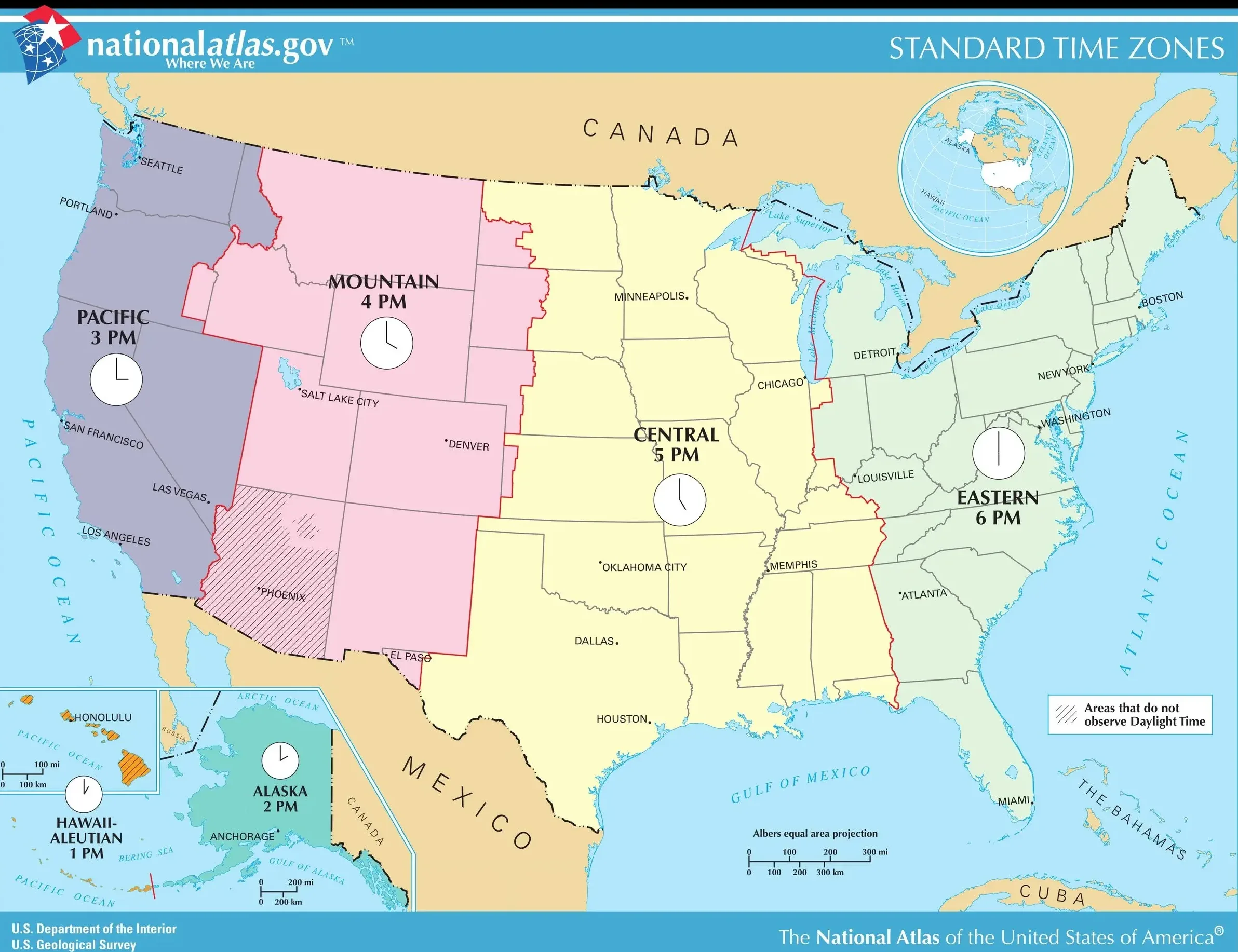
Permanent daylight saving time would be disastrous, just like in 1974
By Matthew Purucker · Editor-in-Chief
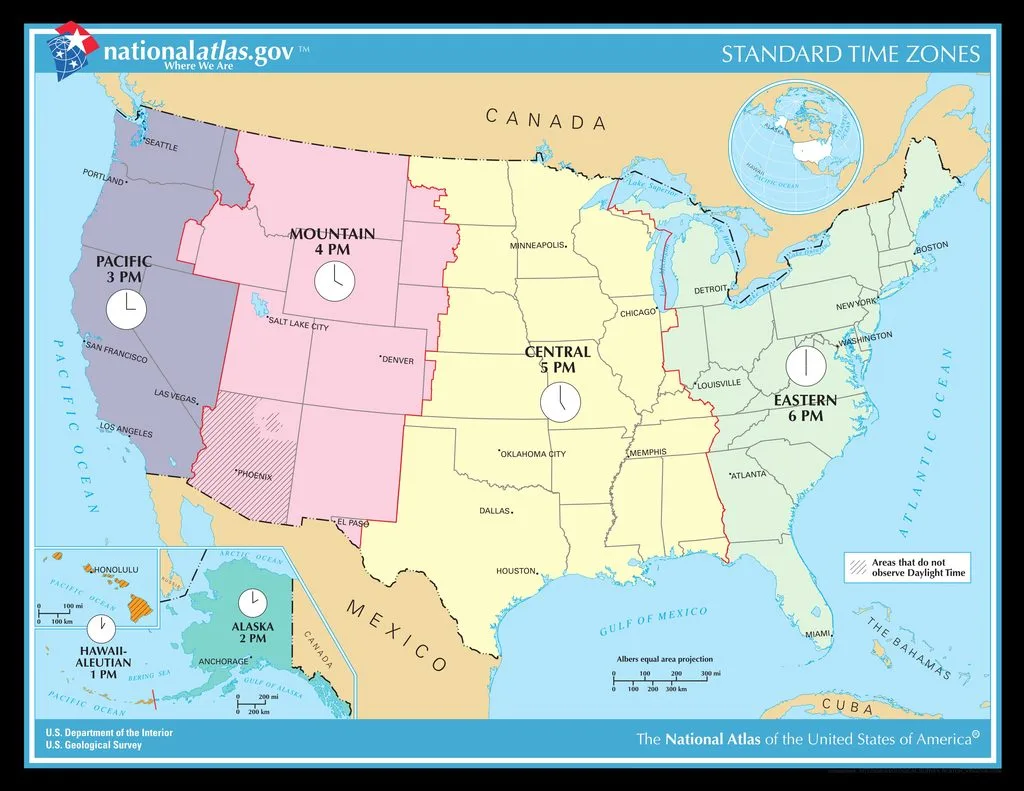
Americans have various opinions about changing their clocks twice a year, but adopting permanent daylight saving time would be a horrible decision.
According to a 2025 Gallup poll, most Americans (54%) preferred ending the twice-a-year switch, and if forced to choose among the three options listed, 48% would favor permanent standard time (solar noon is about noon), 24% would support permanent daylight saving time (solar noon is about 1 p.m.), and 19% would like to keep the current system.
It seems that whatever system we use, most would prefer a different option, but where you live is the biggest indicator.
If you live in the southern or eastern half of a time zone, you are more likely to favor permanent daylight saving time because the sun rises earlier and you will not want to waste that daylight. However, in the northern or western half of a time zone, you can often wake up before the sun in permanent daylight saving time.
The opposite is also true. Sunset also occurs earlier in the eastern halves of time zones, often before 5 p.m.
For example, sunset in Boston will be about 4:14 p.m. on the winter solstice, Dec. 21. Meanwhile, on the same day, sunset in Indianapolis will be about 5:23 p.m. Notice that sunsets in those cities are more than an hour apart, yet they are in the same time zone.
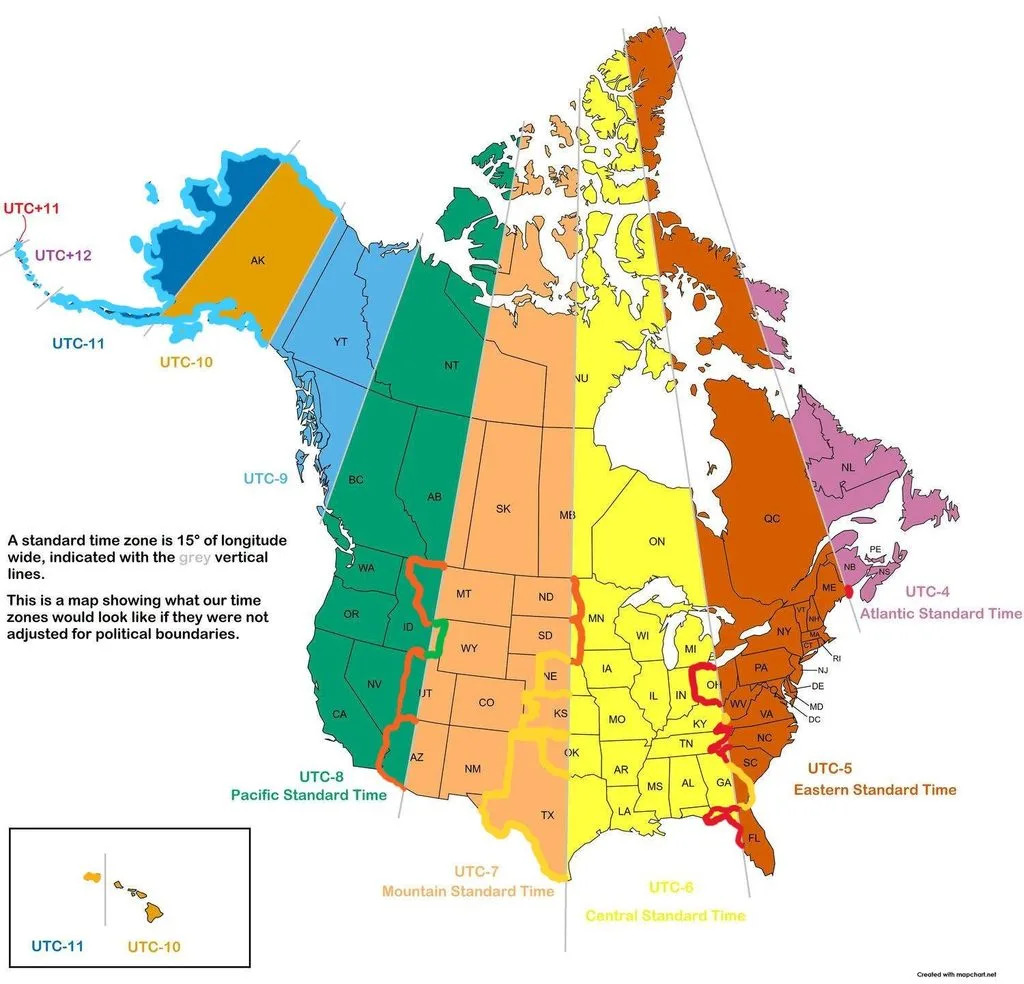
Those cities should not be in the same time zone. So, the first solution is to rearrange time zones to better align with the standard 15° longitude lines that divide the Earth without eliminating the “spring forward, fall back” system.
This change, however, creates some problems with where these lines intersect states. Some fixes are easy: Idaho, North Dakota, South Dakota, Kentucky, Tennessee, North Carolina, South Carolina and Maine would all be in the time zone where they have a clear population and land majority.
Hawaii, Alaska, Utah, Arizona, Nebraska, Kansas, Oklahoma, Texas, Ohio, Georgia and Florida would have tougher decisions. As for what makes the most sense, all those states would keep their time zone borders, except Georgia, which would move to Central Time. Other solutions for those states would also be more reasonable than the current misaligned time zones.
These improvements are unlikely because the government would have to be heavily involved, so a more reasonable fix would be to move up 30 minutes instead of an hour on March 14. This change would be a hybrid, “saving more daylight” in the summer than permanent standard time would while maintaining the body’s circadian rhythm in the winter more than permanent daylight saving time would, all without switching the clocks. This solution is a compromise, not the best.
This hybrid approach also relies on politicians compromising on something that would benefit most of their constituents, so it is unlikely to happen.
Aside from time zone changes, the best option to win is permanent standard time, but that is more likely to lead to states opting out, disrupting time zone unity.
Permanent standard time preserves morning sunlight (pre-8 a.m. sunrises), which the nonprofit advocacy group Save Standard Time argues “is naturally best for health, safety, sports, education, productivity, wages, environment and civil liberties.”
Those who went to high schools that started before 8 a.m. (like mine at 7:18 a.m.) north of the Mason–Dixon Line should know this idea to their detriment in the winter months, waking up at least an hour before sunrise.
So naturally, the House passed the Sunshine Protection Act, the absolute worst option, on July 14. Daylight saving time will become permanent if the Senate passes it, which it has not, and the president does not veto it.
Why, you ask? More evening daylight likely bolsters the economy because people generally want to go to businesses when it is light out, which makes sense for the government (more tax revenue, among other monetary benefits) and especially southern states. Southern states would have greater economic benefits and fewer negative health and safety impacts than northern states.
The United States once tried permanent daylight saving time. President Richard Nixon signed the Emergency Daylight Saving Time Energy Conservation Act in December 1973 to permit a two-year trial. The trial lasted longer than Nixon did, but not by much, as the government ended it early in October 1974.
The National Opinion Research Center at the University of Chicago found that 79% of Americans surveyed supported year-round daylight saving time in December 1973. Just two months later, support cratered to 42%. According to Newsweek, darker winter mornings for schoolchildren were the main cause, though other reasons surely existed.
Daylight saving time did not even exist in the United States until 1918, when the government implemented the Standard Time Act as a wartime energy-saving measure, not to support farmers. The latter idea is a myth of unknown origin. Studies also conflict on whether daylight saving time actually saves energy.
If you remember nothing else from this editorial, remember the following sentence. Permanent daylight saving time is terrible for many reasons, but we have better remedies for the clock-changing debate (most notably fixing time zones, but implementing permanent standard time would be a fine backup); it just takes thinking through the consequences of decisions and learning from them to find these better solutions.