By Brendon Ellis · Contributing Writer
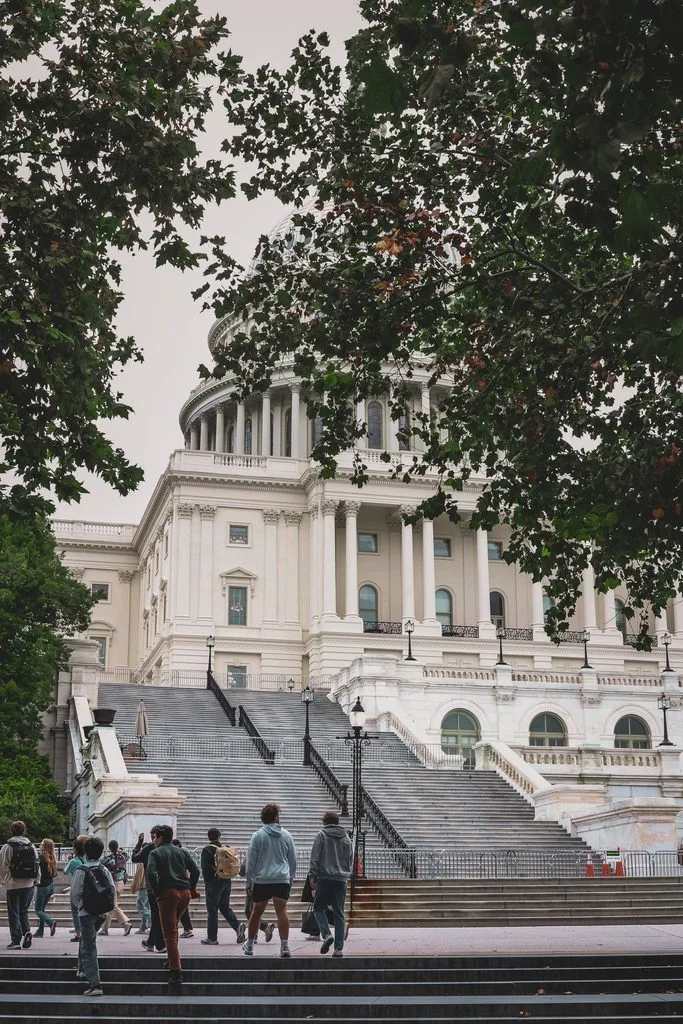
Voters in Grove City and across the nation will decide the outcome of congressional and state races in midterm elections Tuesday.
Nationally, all 435 seats in the House of Representatives and 35 of 100 seats in the Senate are up for election. In addition, Pennsylvania is among 35 other states electing governors.
This fall, Pennsylvanians will choose between incumbent Democratic Gov. Josh Shapiro and Republican State Treasurer Stacy Garrity and elect 25 of 50 state Senate seats and all 203 seats in the state House.
Republicans hold a trifecta in the federal government with President Donald Trump in the Oval Office and Republicans controlling 53 of 100 seats in the Senate and 219 of 435 seats in the House.
Midterm elections are often viewed as a referendum on the president. Since 1938, except for 1998 and 2002, the opposition party has gained seats in the House.
During that same time, the opposition party gained Senate seats in 15 of 22 midterms. The outlying years, 1998 and 2002, had the extenuating circumstances of public backlash to former President Bill Clinton’s impeachment and the aftermath of the 9/11 attacks, which boosted the popularity of the sitting president in each case.
Trump’s approval rating suggests the standard pattern could hold, as it sits at 34% in The Economist’s tracker as of Oct. 25, with disapproval at 61%. As a result of Trump’s unpopularity, there is widespread agreement among political pundits that the House of Representatives is very likely to flip to Democrats while the Senate is more up in the air.
Political science professor Caleb Verbois emphasized the potential effects of congressional control flipping.
“If the Republicans lose just the House, the obvious consequence is that Trump will not just be able to use his party to get whatever legislation he wants done,” Verbois said. ”If the Republicans lose both houses, the question is: what can the Democrats do? Because any meaningful legislation (they pass) he’s likely to veto, right? So, all they can do is investigate and impeach.”
In addition, if the Senate flips, Democrats could block Trump’s cabinet and judicial nominees, placing a major roadblock on the Trump administration. Under Article II of the Constitution, the Senate can confirm or reject presidential appointees for the cabinet, federal courts and the Supreme Court.
However, the results of this election will be far from permanent. Political science professor Michael Coulter pointed out that there has been a pattern of congressional and presidential control flipping recently.
“Whatever happens this time, we might just flip back in 2028 or 2030, and we’re just in this constant cycle of control flipping back and forth,” Coulter said. ”Having a president from one party and Congress from another could create an even greater cycle of gridlock.”
In Pennsylvania, several key races are at stake, with Democrats hoping to expand their narrow majority in the state House, flip the state Senate and reelect Shapiro, which would also give them a trifecta in state government for the first time since 1993.
There is also a major fundraising difference. According to public financial disclosures from the Department of State for the summer period from June 6 to Sept. 14, Shapiro’s campaign raised $13.3 million compared to Garrity’s $1.8 million.
The consensus among political pundits is that Shapiro is very likely to win re-election. Polling aggregators such as Decision Desk HQ and RealClearPolitics have him leading with an average of 57.1% of the vote to Garrity’s 33.8% as of Oct. 25. All major election forecasters, including Cook Political Report, Sabato’s Crystal Ball and Inside Elections, rate the race as safely Democratic.
With a win likely, Coulter suggested that those interested in politics should watch for the margin of victory and whether it’s enough for key legislative districts to flip.
“We will be watching the size of Shapiro’s victory and the influence he has on flipping seats or moving seats towards Democrats in the eastern part of the state. … If Shapiro gets them, it increases his profile heading towards the 2028 presidential election,” Coulter said.
On the Grove City campus, interviewed students had mixed opinions on this year’s midterms and Trump’s performance.
Silas Herring, a freshman political science major, said he and his friends generally still support the Trump administration.
“I know Trump has adopted a lot of extreme policies that have been unpopular with a lot of people, but I believe most conservatives would support his actions, especially on immigration,” Herring said. “Even though they are extreme measures, I think we all agree that they need to be put in place and that he’s doing what needs to be done. And I believe Grove City students support his administration in general.”
On the other hand, some students remain conservative but are wavering in direct support of Trump. Seva Swan, another freshman political science major, discussed how students’ views have shifted recently.
“I’ve seen a degree of students distancing themselves from Trump as a political character because they don’t want to identify with the failures of the administration,” Swan said. “Rather, they want to identify with the ideologies of conservatives (and) conservatism in general.”
Polls for federal and state races will be open from 7 a.m. until 8 p.m. Tuesday.