By Daniel Owen · Contributing Writer
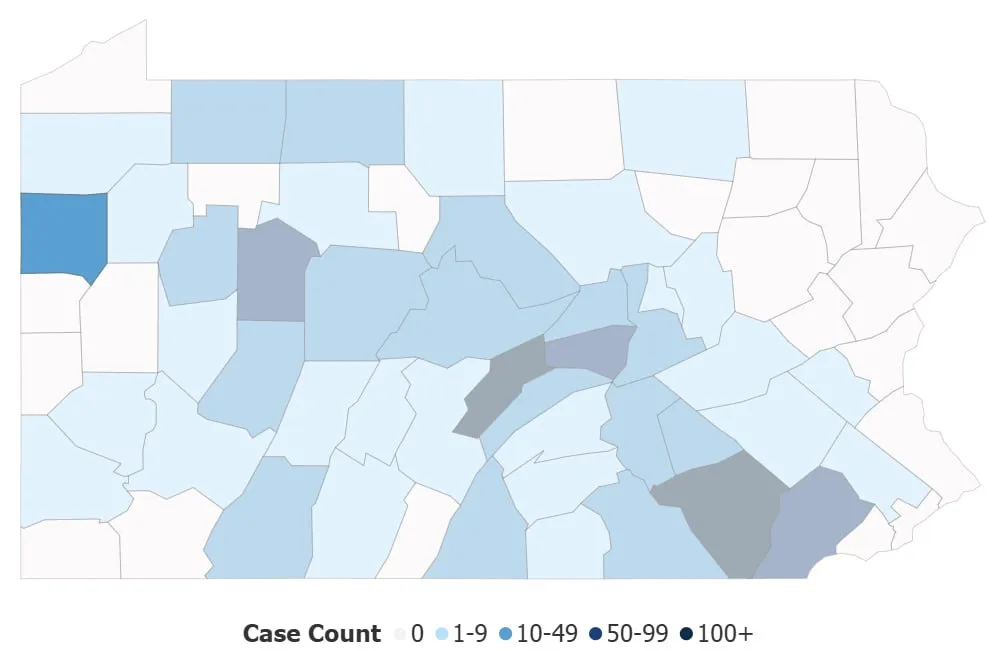
As campus gears up to ward off the impending flu season, a virus believed to have been eradicated long ago has returned to Pennsylvania: measles.
Despite effective vaccinations being available, measles is spreading in Pennsylvania in one of the largest outbreaks in decades, according to the Pennsylvania Department of Health (DOH). So far, the department has confirmed 1,398 measles cases across Pennsylvania for 2026, with a total of five deaths.
Grove City College biology professor and department chair, Devin Stauff, noted that while the virus is not lethal in most cases, it is extremely contagious. However, the Centers for Disease Control and Prevention reported that the surge of outbreaks is not due to its contagiousness but to recent “vaccine hesitancy, virus importation via international travel, and waning immunity.”
Symptoms vary from person to person but can include flu-like symptoms, high fever and a rash, according to Stauff. While college students are in no way immune, measles poses the most dangerous threat to infants under 12 months old, as well as unvaccinated children and young adults. Rather than the virus itself, medical complications brought on by measles cause the most damage.
According to Stauff, the virus can be the cause of miscarriages and encephalitis (inflammation of the brain), and it can wipe out an individual’s immunity to other diseases. Although measles can cause health concerns, there are many methods to treat it.
The World Health Organization states that 92% of the United States has received the MMR vaccine, a measles vaccine administered to infants before 24 months. DOH reported that nearly 350,000 MMR vaccine doses have been administered in Pennsylvania this year.
The MMR vaccine uses a live attenuated (weakened) virus, according to Stauff and is generally taken with mumps and rubella.
Many Amish communities, with the outbreak this year, are currently battling measles, according to Stauff. Choosing to remain unvaccinated, Amish communities across Pennsylvania are being disproportionately affected.
For college students who received the MMR vaccine, Stauff explained that contracting measles is nowhere near as likely.
The flu, however, is a virus the college took preventative action on by hosting two immunization clinics on campus earlier this month.