By Steven Mauch · Contributing Writer
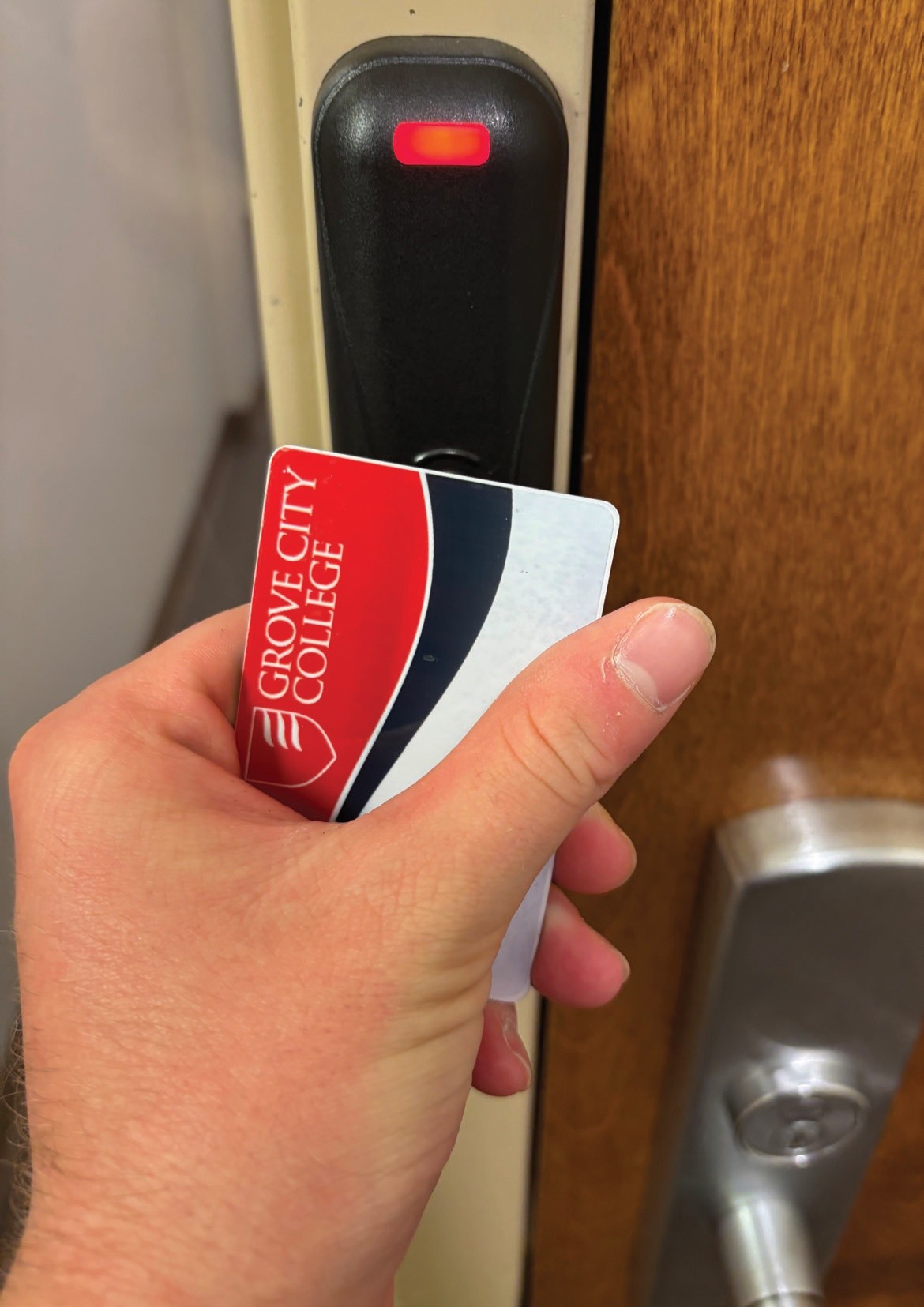
Time is running short for students still holding on to their physical IDs as the deadline to switch to Crimson Card+ looms.
On Oct. 5, those old IDs won’t open doors on campus, and the only way for most students to get in or out will be to use a smartphone equipped with the digital IDs. Students who prefer a physical ID can buy one from the college.
First introduced in March, the safety measure has yet to be fully implemented, and many students have not made the mandatory switch. From doubts that this new technology will be effective to fears of privacy breaches, controversy has surrounded this new policy from its first proposal.
Resident assistants Joe McKelvey and Brady Larkin noted that while they observed some issues with the IDs at the beginning of the semester, they believe those problems have been resolved.
“Connectivity can be an issue just because sometimes the students don’t know how to use the card on their phone,” McKelvey said. “They also haven’t been using it correctly, but that can be fixed. A lot of them will sometimes turn on their phone, go to the app and try to access the card there, which isn’t necessary because you’re able to just scan it with your phone off.”
According to McKelvey, some people couldn’t get into the building or the cafeteria at first, but those problems ended. McKelvey and Larkin believe the issues weren’t due to the technology itself, but that some cards hadn’t been activated yet.
“As far as a user myself, I find it’s perfectly compatible. I’ve had zero issues with it. Honestly, I kind of like it better,” Larkin said. “It’s easier.”
Vince DiStasi, vice president for information technology, recommends that skeptical students who want to buy the new physical ID try, for the sake of their wallets, giving the digital ID a chance.
“If you’re not sure you want to use a digital ID, use it because it doesn’t cost you anything,” DiStasi said. “And then, if you don’t like it, you can always get the card later, but there’s no sense of getting the card and then figuring out you want the digital ID. Then you’d be paying the $25 for nothing.”
DiStasi also discussed the convenience of the digital option for students, arguing that with digital, they do not need to come to the Crimson Card office to pick up their card. The benefits are also significant to faculty in the Crimson Card office, according to DiStasi.
“If we don’t need to print cards, why do we do it?” DiStasi said. “We have to buy cards, we have to buy ink, we have to buy the printers. We have to do all that stuff. There’s additional work on the back end in order for those to work.”