By Randall Elvin · Entertainment Editor
Writing music isn’t for everyone.
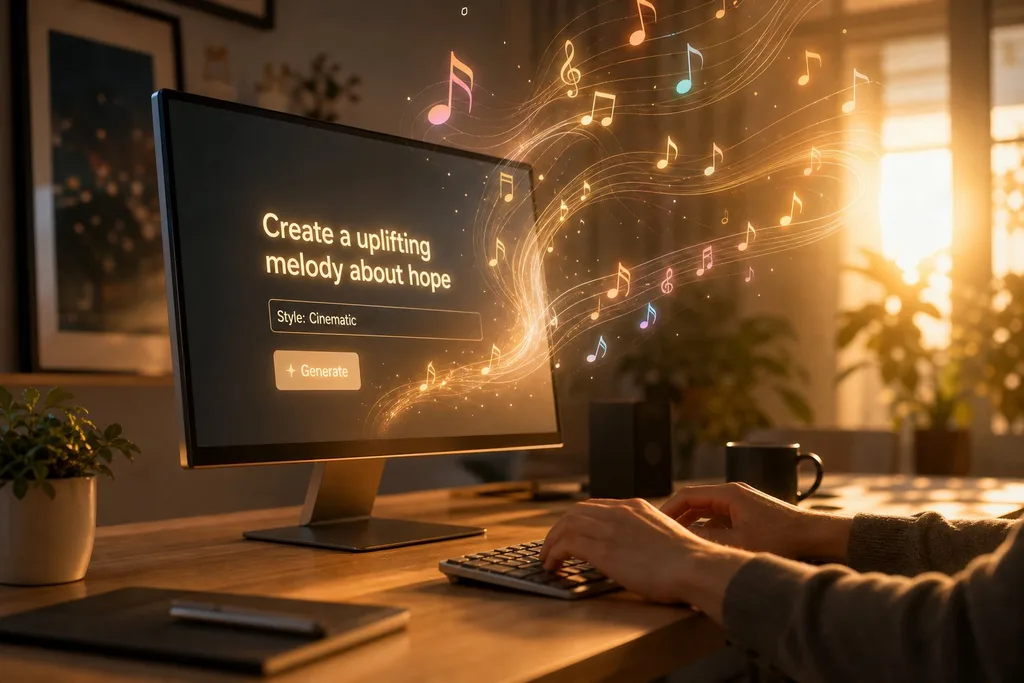
Music can take anywhere from days to years to make. But now it can take … minutes? You didn’t write a melody or provide any vocals, and you certainly didn’t play an instrument, yet there is a complete song made according to the prompts you gave AI.
Is that music?
Two recent developments have emerged from this burning question. One is from Universal Music Group, which announced a licensed AI music platform in partnership with ElevenLabs.
According to their announcement, “The platform is intended to allow fans to create songs, remixes, mashups and new interpretations using participating artists’ music, with the companies emphasizing licensing and compensation for artists and songwriters.”
Music fans can experiment and interact with their favorite artists’ songs and put a new spin on them. Additionally, users can use the built-in AI to create songs, which they can share on the platform for the next user to remix. Universal seems to believe AI will play a big part in the music industry, and they want to capitalize on it first.
The second comes from Australia and seems to contrast with Universal’s approach.
The Australian Recording Industry Association (ARIA) announced that entirely AI-generated recordings would no longer be eligible for its official music charts or ARIA Awards. However, it qualified that music that uses AI as a supporting tool can still be eligible if it is mainly human-made, which raises the question of how much AI can be used and how much use would disqualify it.
The decision came after an AI-generated version of Madonna’s “Like a Prayer” gained significant attention in Australia and reached the top 10 of the country’s music charts.
To whom does the song’s credit go? The person who wrote the prompt? The company that created the AI? The AI itself?
AI could allow people without traditional musical training to experiment with songwriting and production. It could give artists another creative tool, make certain parts of music production more accessible and give fans new ways to interact with their favorite musicians.
At the same time, musicians have legitimate reasons to be cautious. AI can imitate voices, reproduce musical styles and flood streaming platforms with songs produced with little or no human involvement. If an artificial version of an artist can compete directly with that artist, the value of human creativity becomes harder to define.
AI is trained on past songs, so theoretically all AI-generated songs borrow from other people’s work. Some argue that this is unacceptable and amounts to stealing, while others note that most musicians are inspired by other artists anyway.
Universal is betting on a future where AI becomes another tool for artists and fans. Australia is distinguishing AI-assisted music from music AI creates entirely.