
By Randall Elvin · Staff Writer
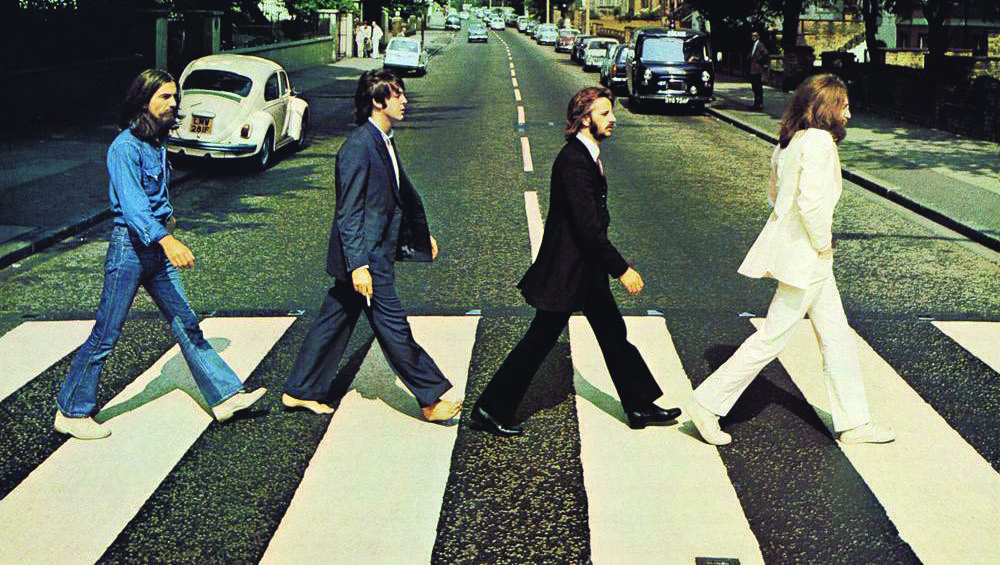
Exactly 56 years ago on Sept. 26, 1969, The Beatles released what would be their last studio album titled “Abbey Road.”
This album has been labeled as their crowning achievement and their “magnum opus,” as it blended experimentation, rock, jazz and drew on classical composition – an impressive feat to say the least. Their record reached heights never even considered before.
Most Grove City students may not realize this, but our very own campus pays tribute to this album – a display of how music from Liverpool can reach even Western Pennsylvania.
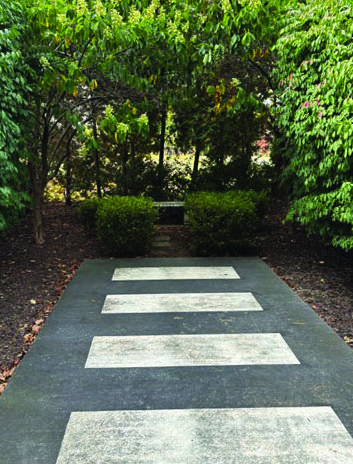
Tucked between Hicks dormitory and the Staley Hall of Arts and Letters, the memorial dedicated in memory of David G. Moser ‘68 sits peacefully honoring The Beatles’ “Abbey Road.” Tall bushes surround a stone bench on three sides while giving a view of a sidewalk slab that is modeled after the timeless cover.
The cover art, which is one of the most recognized and imitated images in history, features the four Beatles members walking across a London crosswalk. On the plaque just off to the side of the memorial bears one of the most famous Beatles lyrics: “And in the end, the love you take is equal to the love you make.”
This hidden memorial is a quiet reminder of the values The Beatles so often sang about: love, reflection and connection. For students who stumble across it, the space offers an aesthetic place for solitude, reflection, prayer or even a phone call. It’s a great piece of history permanently affixed on campus that displays the cultural relevance and impact that “Abbey Road” had.
The reason the legacy of “Abbey Road” endures around the world is clear; songs like “Here Comes the Sun,” “Come Together” and “Something” were not only widely popular in 1969, but remain so today. It topped charts for 17 weeks straight in the United States. This cemented The Beatles’ reputation as the most influential band of all time.
Even in more recent times, The Beatles’ “Abby Road” tracks are featured in many high-profile movies and TV shows like “Forest Gump,” “Friends,” “The Office” and “The Parent Trap.” According to reports, “Here Comes the Sun” remains among the most streamed tracks of the 20th century, while more traditional radio plays easily sit in the millions.
The legacy of “Abbey Road” lies in how each Beatle left their own enduring mark on the record. Though often overshadowed in the early Beatles years, George Harrison emerged as an equally talented songwriter as he penned “Something” and “Here comes the Sun.” Both became staples of classic rock. Legendary Paul McCartney carried the album’s melodic structure, showcasing that pop can be an ambitious art.
Finally, John Lennon and Ringo Starr both added to the star-studded lineup with “Come Together” and “Octopus’s Garden.” Both songs reminded listeners of the band’s ability to put out polished, clean work while also delivering their playful spirit.
From Liverpool to Grove City and beyond, “Abbey Road’s” impact shows no signs of fading even 56 years later. What began in a London studio in 1969 transcended time and place to echo across generations.
Countless listeners, artists and even Grove City College students have been inspired by The Beatles’ masterpieces.
“The love you take is equal to the love you make” – in many ways that simple lyric encapsulates the legacy of “Abbey Road” itself. It’s an album that continues to offer reflection through its music, message and memorability.