By Randall Elvin · Entertainment Editor
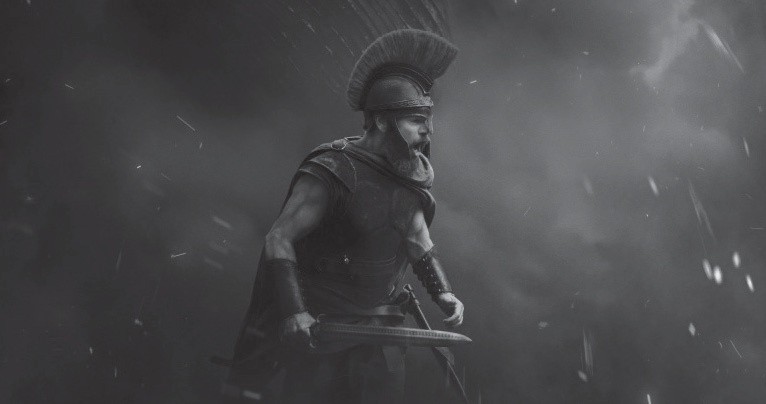
“The Odyssey” has been retold countless times; directors have repeatedly tried to translate Homer’s 3,000-year-old epic into a smash-hit movie.
World-famous director Christopher Nolan seized the opportunity to bring Homer’s epic into movie theaters. Many viewers were disappointed due to the differences between the book and the movie, while many other viewers loved his ambitious interpretation.
Those who have previously read “The Odyssey,” whether in high school, in leisure reading or in Classical Literature with English professor Andrew Harvey, will note that Nolan’s version contains noticeable alterations. There are a few reasons for the changes, but the most reasonable explanation is that Homer’s epic is enormous, and filmmakers simply cannot transfer every page onto a movie screen. This is true for many book-to-movie adaptations. Something must be cut. The scenes that are left out can leave an empty feeling for some faithful readers while simultaneously allowing other viewers to love it for its interpretation style. According to the English professors, that is part of the challenge and freedom of adaptation. One professor described Nolan’s film as an “imaginative retelling.”
The distinction was obvious when it came to the main character, Odysseus. In Homer’s epic, he is a character renowned for his cleverness and pride. Harvey describes him as “a different guy” when comparing the Odysseus of the movie with the Odysseus of the book. This change is important because modern movies tend to reveal how heroes react internally as well as externally. Professor Joshua Mayo weighed in on the difference by sharing that the “Odysseus in the book was not worrying about the lives taken in Troy.” In Nolan’s version, Odysseus is carrying the weight of war with him and is filled with guilt over the collapse of civilization.
The same transformation can be seen in Nolan’s treatment of the gods in contrast with Homer’s treatment of them. In Homer’s “Odyssey,” Athena actively engages with Odysseus while Poseidon works against him. At the beginning of the book, the reader is introduced to the gods at Mount Olympus gathered around talking about Odysseus. However, in the movie this is never shown, and although Nolan does not deny the supernatural, Nolan presents the gods through divine intervention rather than showing gods as major or minor characters on screen. Mayo believes that since we no longer live in a pagan world, which had a very different understanding of morality and heroism, Odysseus had to be different from the book. He was a complicated and morally ambiguous hero, a kind of character very rarely represented in modern movies. Movie audiences expect their heroes to be likeable and whose actions can be justified. In Homer’s “Odyssey,” Odysseus doesn’t fit that mold because of his violence, deception and unfaithfulness. Nolan understood movie audiences and molded the character to be redeemable to a modern audience.
Harvey calls it an “epic movie in every sense” and proclaims that Nolan was the “only guy for the job.” Even with the changes he brought, Nolan insisted on preserving the feeling of an epic. Monsters, warriors and an extraordinary journey were displayed on the 70mm IMAX film, the pinnacle of film advancements.
Throughout all the criticism and heavy expectations, Nolan was bold in his handling of this movie, and fans turned out in droves. “The Odyssey” earned more than $1.4 billion worldwide and became Nolan’s highest-grossing film. That number tops his other major films, such as “Inception,” “Interstellar,” “The Dark Knight,” “Tenet” and “Oppenheimer.”
Nolan’s success does not mean that he recreated Homer perfectly. In fact, his success may prove that he did not need to. Mayo’s advice may be the best way to approach the film: “Think of it as a great myth that’s retold and don’t expect it to be the same as Homer’s ‘Odyssey,’ and you’ll delight in the choices.”