
By Mia Gallagher · Celebrate 150 Correspondent
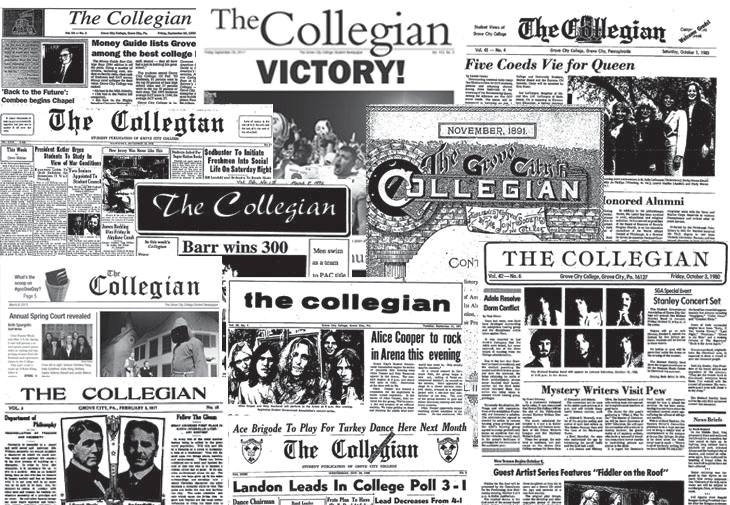
Is print journalism dead? If you’re reading this in the print edition of The Collegian, the answer should be obvious. It’s no.
Is print journalism dying? Maybe. The digital age has been edging out print for decades, causing hundreds of smaller publications to close or transition to online formats. Not so for The Collegian, which has played a big role in the 150-year history of Grove City College – and the preservation of that history.
The student newspaper helps Director of College Archives and Galleries Hilary Walczak ’09 study past events and campus culture across the decades. “The Collegian has been a great tool to preserve the college’s history. It’s a source to find out pieces of campus and student life history,” Walczak said.
But more than that, The Collegian has provided readers with “all the news that’s fit to print” about the college, from hard news to feature stories and intense sports coverage, a regular outlet for student opinion and a training ground for student journalists, according to Nick Hildebrand, director of College Communications and the newspaper’s adviser.
“The Collegian has been an essential part of college life for 137 years. Over the decades it has told the story of Grove City College through thousands of articles by as many dedicated student journalists, many of whom have gone onto careers in the media,” Hildebrand said.
“The paper has gone through some intense changes over its history and played an important role not just in reporting what’s going on at Grove City College, but in representing student interests and concerns in a very public forum,” he said.
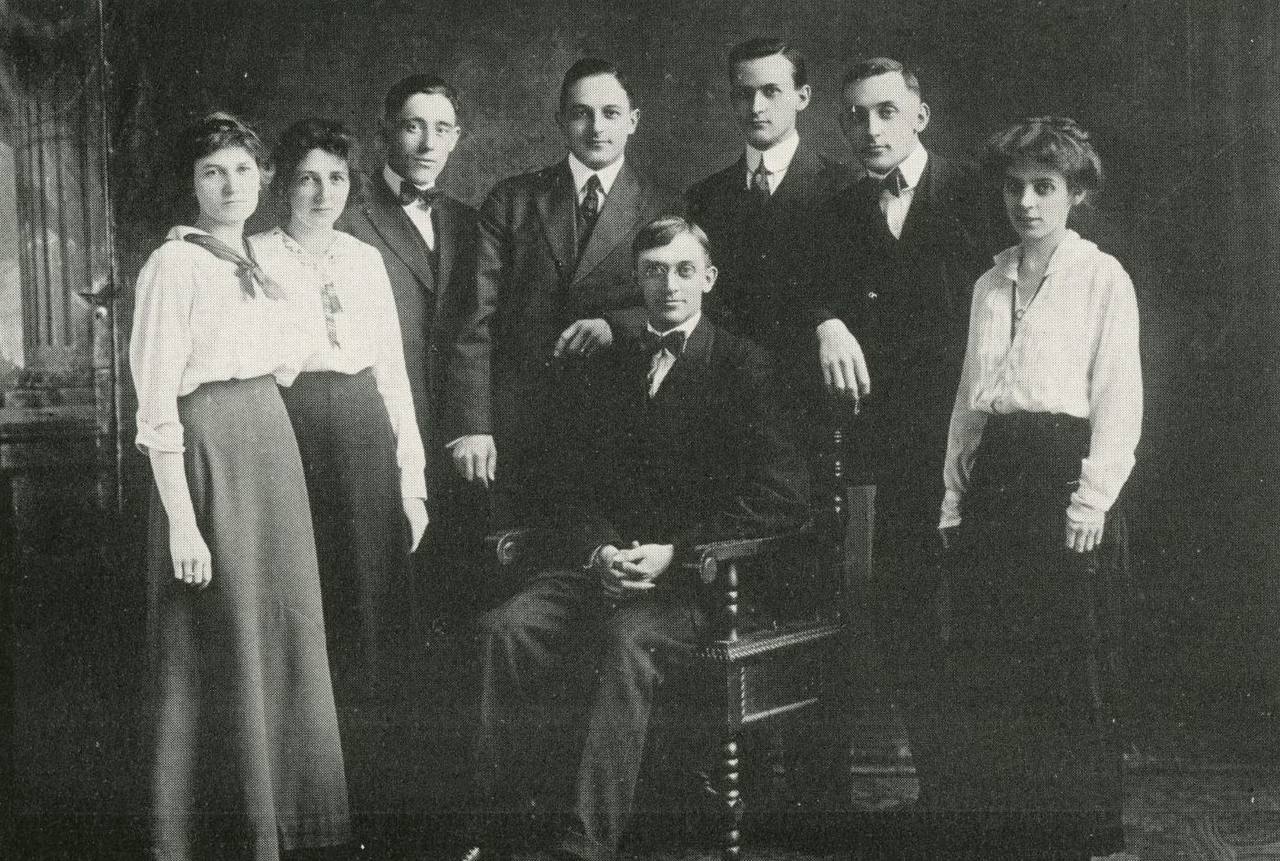
In 1891, only 15 years after the college’s founding in 1876, The Collegian’s first issue went to print. Under the direction of its first Editor-in-Chief Samuel McClure, The Collegian embarked on a journey to uphold faith and freedom through paper and ink.
The newspaper’s founding came at a time when many colleges founded official schools of journalism. While Grove City College never had such a program, The Collegian has been a kind of J-school for hundreds, if not thousands, of student journalists. Over the decades, it’s changed significantly.
“The Collegian was originally smaller in size – almost like a little book – and it came out monthly at first. At that time, it was more literary and less student news. While it did still cover some student news and clubs, it was more academic and philosophical,” Walczak said.
The Collegian began weekly publication in 1914 and the newspaper’s coverage shifted toward more journalistic endeavors. Student journalists began to cover more timely stories, leading to greater coverage of athletics and campus-wide events. By the start of World War I, The Collegian had solidly cemented its place in campus life, establishing a tradition of journalistic excellence that would uphold it through the war.
The war’s impact helped shatter a glass ceiling when many men left campus for the service. In 1917, The Collegian lost three editors-in-chief to the war, and in the fall of 1918, Isabelle Blyholder became its first female editor-in-chief. Blyholder stepped into the top job at a tenuous time.
In addition to the war’s end in November 1918 and the national Influenza epidemic beginning that same year, Blyholder’s early editorship was marked by hot-button news stories and timely editorials. By the spring of 1919, however, her editorials turned their focus to campus issues. Her most scandalous – for the time – piece, titled “The Girls,” heavily critiqued the college for the strict standards it held female students to.
“Kindly remember that while ‘the boys’ were away the girls swung things through and they are no weakling. So well did they do that no really vital traditions at GCC have been abandoned. Like all other mortals, even men, we crave recognition,” Blyholder wrote.
The Collegian’s second “girl boss” was Helen Calderwood Harker. The daughter of Dean A.J. Calderwood – whose name graces the school of arts and letters – and later the wife of President J. Stanley Harker, she is the namesake of Helen Harker Hall, Walczak shared.
Between the World Wars, The Collegian expanded and improved their approach to news coverage. Key national news stories — like Prohibition, women’s voting rights and the New Deal — all received their due coverage. Local news stories — like the college’s upper campus expansion and construction of Harbison and Rockwell — were documented as well.
The paper had become a broadsheet by then and mimicked the design of bigger regional and national publications.
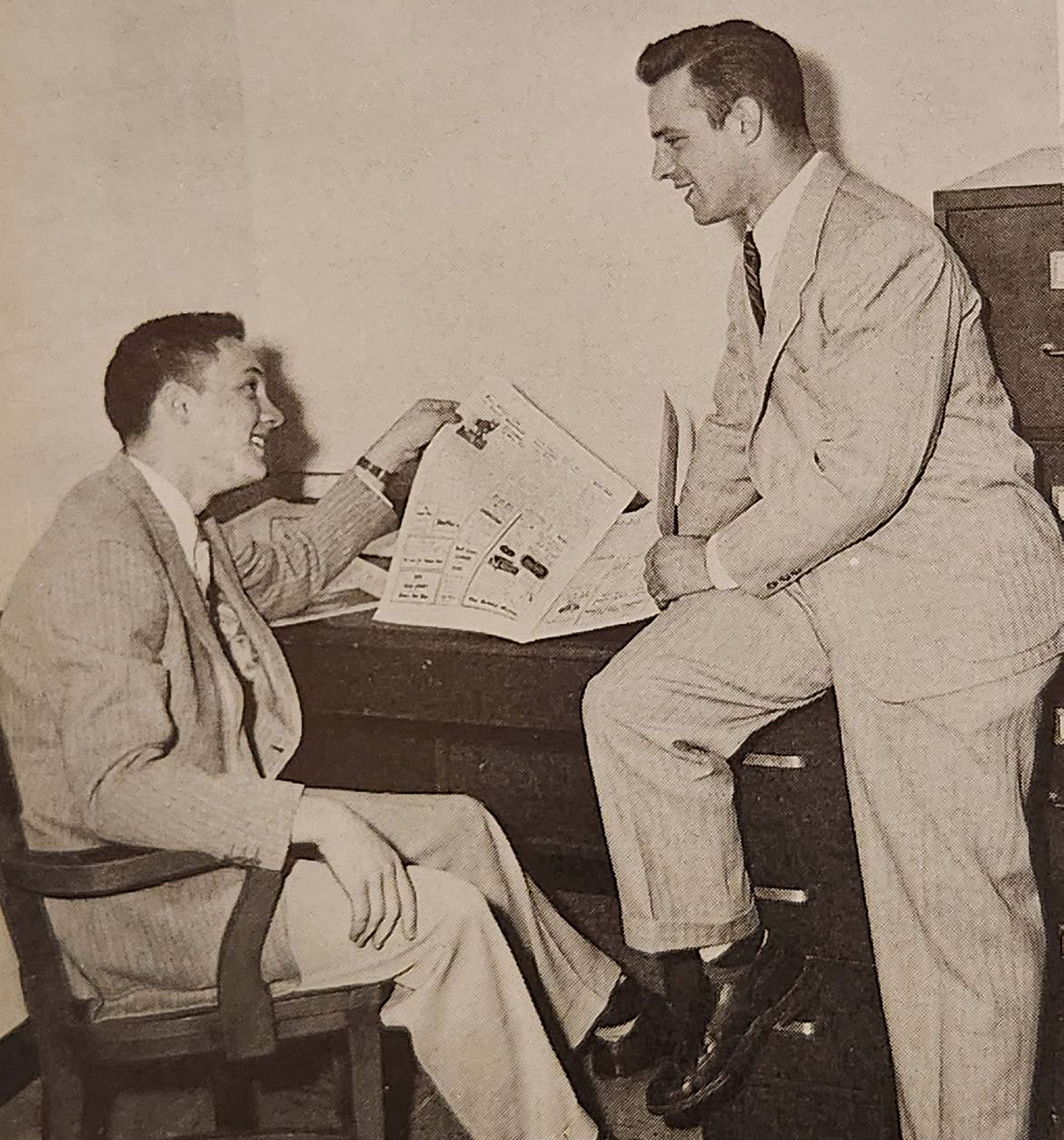
By World War II and its aftermath, The Collegian had truly hit its stride — not missing a beat when male students were again called away to war. Key stories from this era included the college’s work on radar research and the naming of a naval ship, the GCC Victory, after the college.
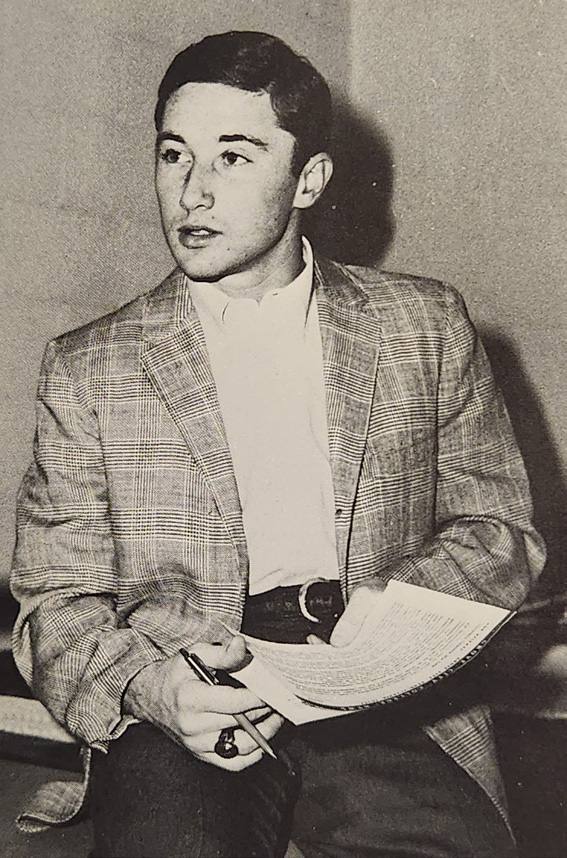
From the Cold War era to the present, The Collegian has provided the college with enthusiastic reporting and sage – and sometimes sarcastic – commentary. Its modern community and perspectives sections offer a forum for students to showcase their accomplishments and share their unique opinions. And its news section continues to comprehensively cover campus news and the big issues that matter to the college’s community.
Hildebrand, who has advised the paper’s staff for 13 years, said he suspects that the students of the last century were a lot like the ones that work on The Collegian today.
“Student journalists are a special breed. They are committed to truth-telling and perfecting their craft for the benefit of others,” Hildebrand said. “It’s hard work but they do it joyfully.”
In recent years, The Collegian has been recognized by the Pennsylvania NewsMedia Association with multiple Student Keyston Media Awards.
The newspaper is supported by funding from the Office of Student Life and Learning.
With the world moving more and more into the digital age, it’s vitally important that print journalism institutions, like The Collegian, survive. Journalism is an art. It is a craft. It is a form of storytelling that, done well, gives a voice to the masses and records their history.
With support from the Office of Student Life and Learning, Grove City College is committed to continuing The Collegian tradition.
“We live in a world where most students don’t read newspapers anymore and it is very important that we keep The Collegian alive. The Collegian is one of the last places to collect the day-to-day lives of the students in the here and now. It truly captures how students think and live at this moment in time,” Walczak said.