By Madison Fossa · Contributing Writer
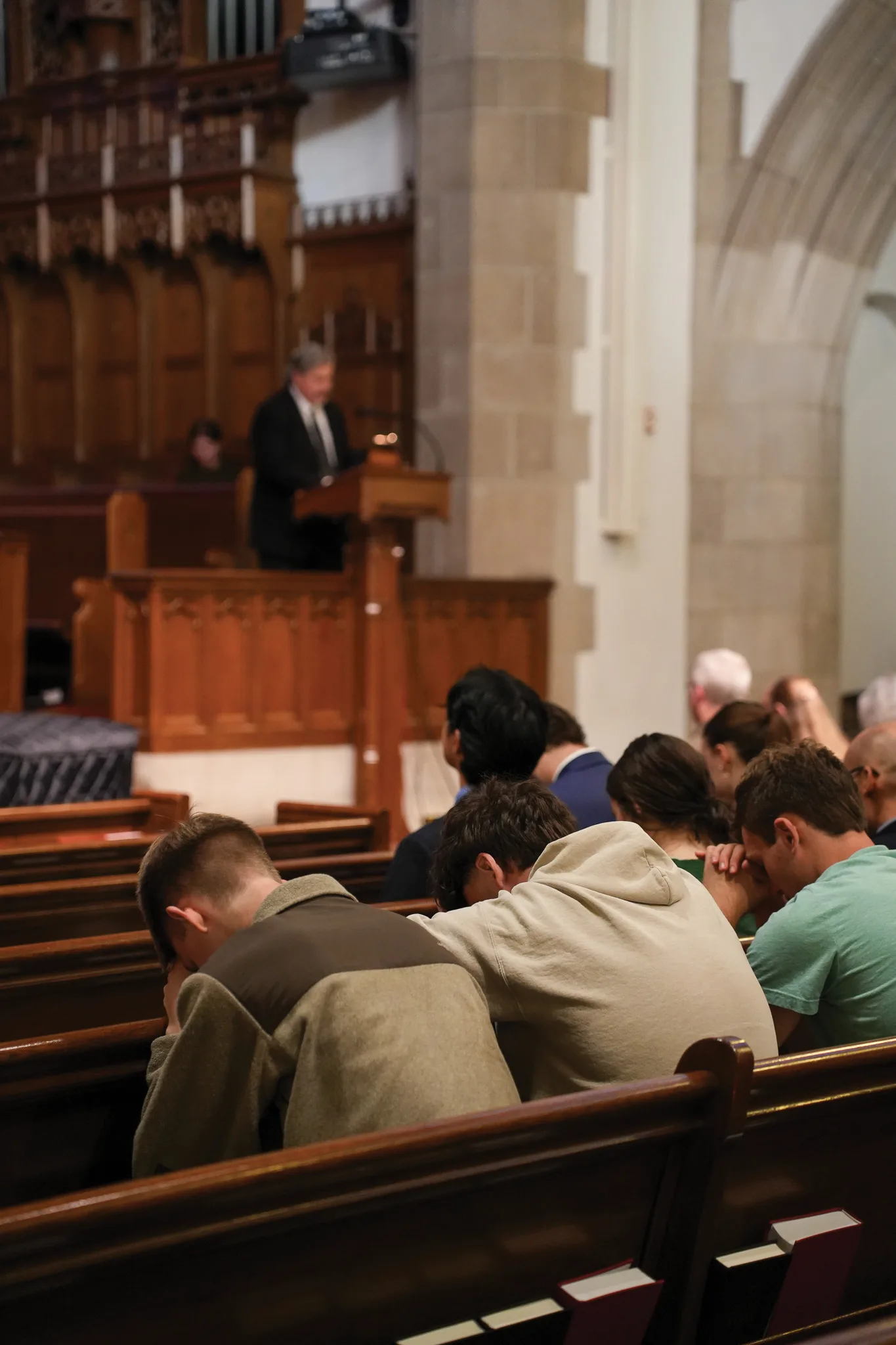
Kimberly J. Miller’s chapel message on Feb. 25 in Harbison Chapel thoroughly discouraged me. At best, the speaker’s words were grossly vague. At worst, they engaged the student body in errant prayer.
My immediate reaction to the service was skepticism, because Miller is a woman. As a woman myself, I do not believe that women are incapable of speaking or are any less spiritual than their male counterparts; however, the Bible commands them to remain silent in church (see 1 Corinthians 14 and 1 Timothy 2). Unless we are to assume that college-age males are not yet men, a woman assuming this position of authority behind the pulpit was wholly inappropriate.
I understand there are arguments against my position, particularly in the chapel setting. Indeed, if the service had been a special presentation, a guest speaker promoting her book or a highlight from a women’s ministry, I would understand a female speaker, especially since chapel is not church. However, Miller’s message was a sermon, and as such, it is unbiblical that she should have been the one delivering it to the entire student body.
Furthermore, I take issue with the vague platitudes in the message, which are difficult to define and thus difficult to argue with. Phrases such as, “God is emotionally available,” or “with the help of God’s spirit, you can lead your inner world,” are confusing. Exchanging verses for psychological platitudes fails to sufficiently equip students with biblical truth and instead confuses them. What do these phrases even mean?
Miller also used many Scripture references during her message, and I do not want to overlook this.
In fact, I thought that the message was strongest with these passages! I wish that lines about our “inner voices” and physiological generalizations about God’s character would have been replaced with more Scripture.
For instance, I think that 1 Peter 3 and 4 would have suited Miller’s talk phenomenally.
Even substituting out a quote from the fictitious Jesus in “The Chosen” with a quote from the living Christ in the Gospels would have enhanced the lesson. However, instead of speaking clearly and biblically, there were many times that Miller opted to use confusing phrases that stunted her message.
My final plight with the service was the “simple contemplation” segment. The reference to Ignatius made before the prayer did little to ease my concerns; as an ardent defender of orthodox faith, it seems quite the interpretive leap to posit that Ignatius’ method of prayer could be correctly translated into such a modern, mystic practice. Without a better citation or further context, I struggle to accept this.
Ignatius aside, the Bible clearly portrays meditation as filling one’s mind with God’s word. The prayer in the chapel service was more akin to Eastern mysticism or even Freudian emptying of the mind than Biblical meditation and had no place in the chapel service.
Trusted Christian institutions like Grove City must guard themselves against the world’s empty philosophies. Furthermore, we should reserve space at the pulpit for men of God ready and willing to equip students with biblical truth through clarity and orthodox Christian preaching.