
By Olivia Emerick · Copy Chief
Amid a February full of division, turmoil and upheaval, Americans across the country tuned in to two major sporting events: the Super Bowl on Feb. 8 and the Winter Olympics, which began Feb. 6 and will conclude Sunday.
The Super Bowl averaged 124.9 million viewers according to ESPN, making it the second most-watched U.S. broadcast ever. While the Olympics are still ongoing, early data from NBC shows that an average of 26.5 million Americans watch the games per day, with the numbers peaking at 42 million viewers during Sunday night prime time.
Though much of America is gathered around the same metaphorical TV, we are just as divided as we were in January. On Feb. 8, the audience wasn’t only split by which team they were rooting for, but also by which halftime show they were watching. Though TPUSA’s halftime show was less successful than Bad Bunny’s (peaking at 5 million concurrent viewers compared to 128.2 million, according to ESPN), the fact that there was an alternate halftime show in the first place proved one thing: America is incredibly polarized, to the point where we can’t even agree on a performer for a football game.
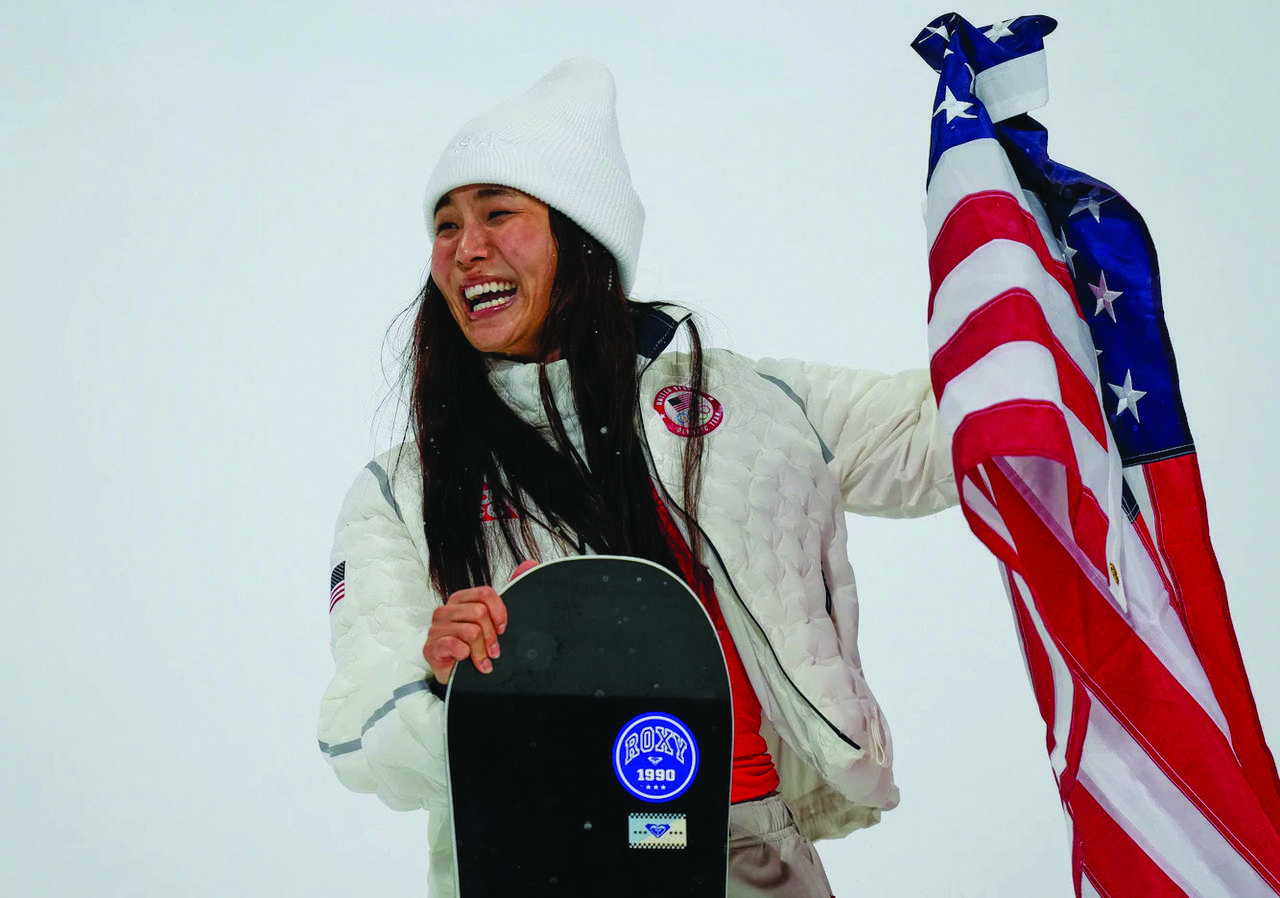
At the same time, the Olympics are typically when we set aside our differences to cheer for the incredible American athletes representing our country on the global stage. However, several athletes acknowledged that it can be difficult to represent the United States now.
“I love the USA, and I think I would never want to represent a different country in the Olympics,” Team USA freestyle skier Chris Lillis said in a CBS News article. “With that being said, you know, a lot of times, athletes are hesitant to talk about political views and how we feel about things. I feel heartbroken about what’s happened in the United States.”
“I think it brings up mixed emotions to represent the U.S. right now, I think. It’s a little hard. There’s obviously a lot going on that I’m not the biggest fan of, and I think a lot of people aren’t,” Hunter Hess, another freestyle skier on Team USA, said in the same article. “I think for me it’s more I’m representing my, like, friends and family back home, the people that represented it before me, all the things that I believe are good about the U.S.”
“My parents being immigrants, this one definitely hits pretty close to home,” two-time Olympic gold medalist Chloe Kim said, according to MSN. “I think in moments like these, it is really important for us to unite and kind of stand up for one another, for all that’s going on. And I think that I’m really proud to represent the United States. The U.S. has given my family and I so much opportunity. But I also think that we are allowed to voice our opinions on what’s going on. And I think that we need to lead with love and compassion. And I would love to see some more of that.”
We all want the U.S. to be the best it can be. We’re proud of our athletes and artists. And yet, it can be easy to forget this when we look at the state of our country.
In the final minute of his halftime show airing on NBC, Bad Bunny shouted, “God bless America,” and began calling out the names of multiple countries and territories in North and South America. Dancers ran behind him, proudly bearing flags, with the U.S. and Puerto Rico leading the way. The large screen in the stadium displayed the statement “The only thing more powerful than hate is love.”
Bad Bunny ended his set by holding a football to the camera with the words “Together, we are America.”
Say what you will about the dancing, lyrics, set design or quality of Bad Bunny’s performance; this halftime show embodied the diverse, yet unified, spirit of America that Lillis, Hess and Kim are representing in the Olympic Games.