
By Anastasia Brown · Community Editor
I have only been working on staff for The Collegian since the start of the semester, and I have loved getting to know the team up in the Tower over the past few weeks.
Our current editor-in-chief (Emily Fox) and our managing editor (Kathryna Hoyman) are both women, and considering the female-heavy demographics of campus departments like English and Communication Arts, this is not very surprising.
But did you know that it was during the 1918 school year that the first female editor-in-chief served The Collegian? That was over 25 years after the founding of the newspaper, and considering that Grove City College admitted female students since its establishment, it is notable that it took so long for a woman to hold this role.
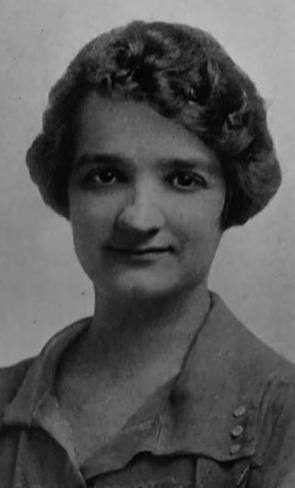
The trailblazer was Isabelle Blyholder, a Pennsylvania native born in 1894, who attended Ford City High School, about 40 miles from Grove City.
When she graduated from the college in 1919, the “Ouija” yearbook recognized her accomplishments by describing that “to her comes the honor of being the first girl to act as editor-in-chief of The Collegian, and she has filled this position with marked success. She is an active club member, an earnest student and when it comes to athletic contests, Isabelle is always on hand with all her pep. Judging from her career in Grove City, we predict that she will realize her most cherished ambitions.”
She had a typical Grover-achiever list of accomplishments, but the most fascinating part of her story is her confidence in challenging the school to consider radical changes to institutional rules for female students.
Blyholder may have, in part, gained her position on The Collegian staff because of her tumultuous historical moment — the United States had recently entered World War I — and as campus archivist Hilary Walczak points out, women were increasingly entering the workforce in new ways.
“Isabelle took the lead with World War I still going on. Women across the country are fighting for the right to vote,” Walczak said. “The Flu of 1918 was killing people around the world. This was when Isabelle wrote some provocative editorials that, for the time, were probably rather scandalous.”
Her most notable editorial was published in The Collegian in April of 1919 and was titled “The Girls.”
“This is a girly article,” Blyholder began. “It is of the girls, for the girls and by a girl. Will the gentle men all step to the rear of the auditorium for the present?
“My subject is girls. We hear too little about them now-a-days. Oh yes, I hear you say, ‘Well, the War has brought women to the front.’ Indeed it has. But there are still a few isolated spots in the universe where Girls are kept in the background and our own little college is one.”
She goes on to point out that, while rules for female students were strict and specific — regulating when girls had to be in the dorms and when they had to turn out their lights — rules for male students in these areas were nonexistent.
“No one can go to college and do anything at all outside of regular studies and go to bed at 10 p.m.”
Blyholder’s complaint resounds across the generational divide and resonates with Grovers today.
“Do you men ever think that when a young lady comes into class with all her lessons well prepared, she has sat up a half, three quarters or a whole hour longer than ‘lights’ with only the dim flickering rays of a candle to aid her. Surely, such a situation makes the God of eye doctors laugh. Just why boys’ eyes are valuable I love to think that this sharp-witted woman penning her editorial for The Collegian over a hundred years ago isn’t too dissimilar from the other female staff members on The Collegian today, all taking our turns to write editorials on topics large and small.
We all feel swamped with responsibilities as we throw ourselves into every opportunity college affords. We all hope to make a difference with our writing. And we all love The Collegian and the college as a whole.
But I am thankful to Blyholder for standing up for justice, for herself and the women who would come after her. She continued to seek the good of the school even long after her graduation, as she served on the Grove City College Alumni Council from 1951-66.
She died in 1984 at the age of 90 and is buried in Armstrong County, and I hope she knows how much her fearless ness as a leader here on campus has impacted generations of students and writers of The Collegian.