
By Mia Gallagher · Celebrate 150 Correspondent
To celebrate Grove City College’s 150th anniversary, The Collegian is exploring the College’s history, traditions and culture in this ongoing series.
What is the Grove City College Greek community? Where did it come from? What’s so “secret” about these societies and their traditions? Why does the college have Greek life at all?
As another year of new active recruitment and initiation draws to a close, it seems a fitting time to address these very questions.
On the surface, the college’s Greek tradition may look silly, superficial and selective — just a bunch of young men and women planning campus events and “paying” for friends.
But diminishing the Greek community to these stereotypes neglects the rich histories and integral traditions these groups bring to campus life — let alone the lifelong friendships and philanthropic spirit its members gain from the experience.
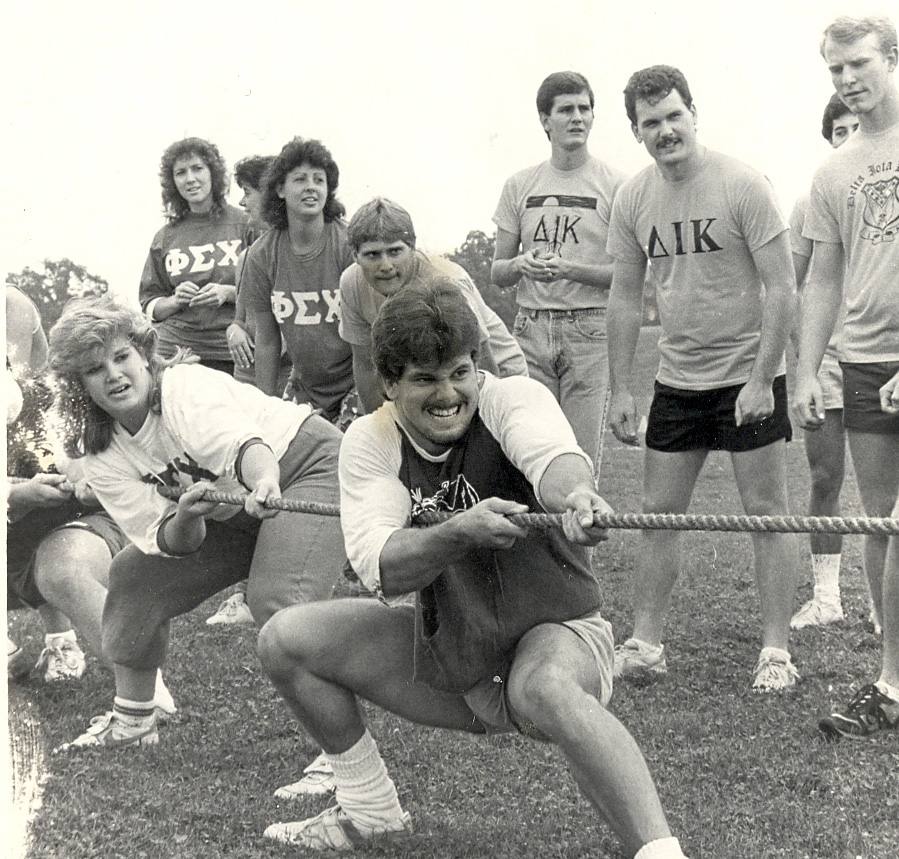
“Greek life has always been heavily involved in the community of Grove City College. There were points in history where nearly 60% or more of the student body was Greek. They held events, participated in philanthropic activities and hosted dances,” Director of College Archives and Galleries Hilary Walczak ’09 said.
While the modern Greek community enjoys the visibility and inclusivity described above, its oldest societies were founded invisibly and secretly.
“(College founder) Isaac Ketler was adamantly against Greek groups forming on campus in the early years of the college, so much so that he forced students to sign a contract saying they wouldn’t join a fraternity or sorority, and if they were caught, they would be expelled,” Walczak said.
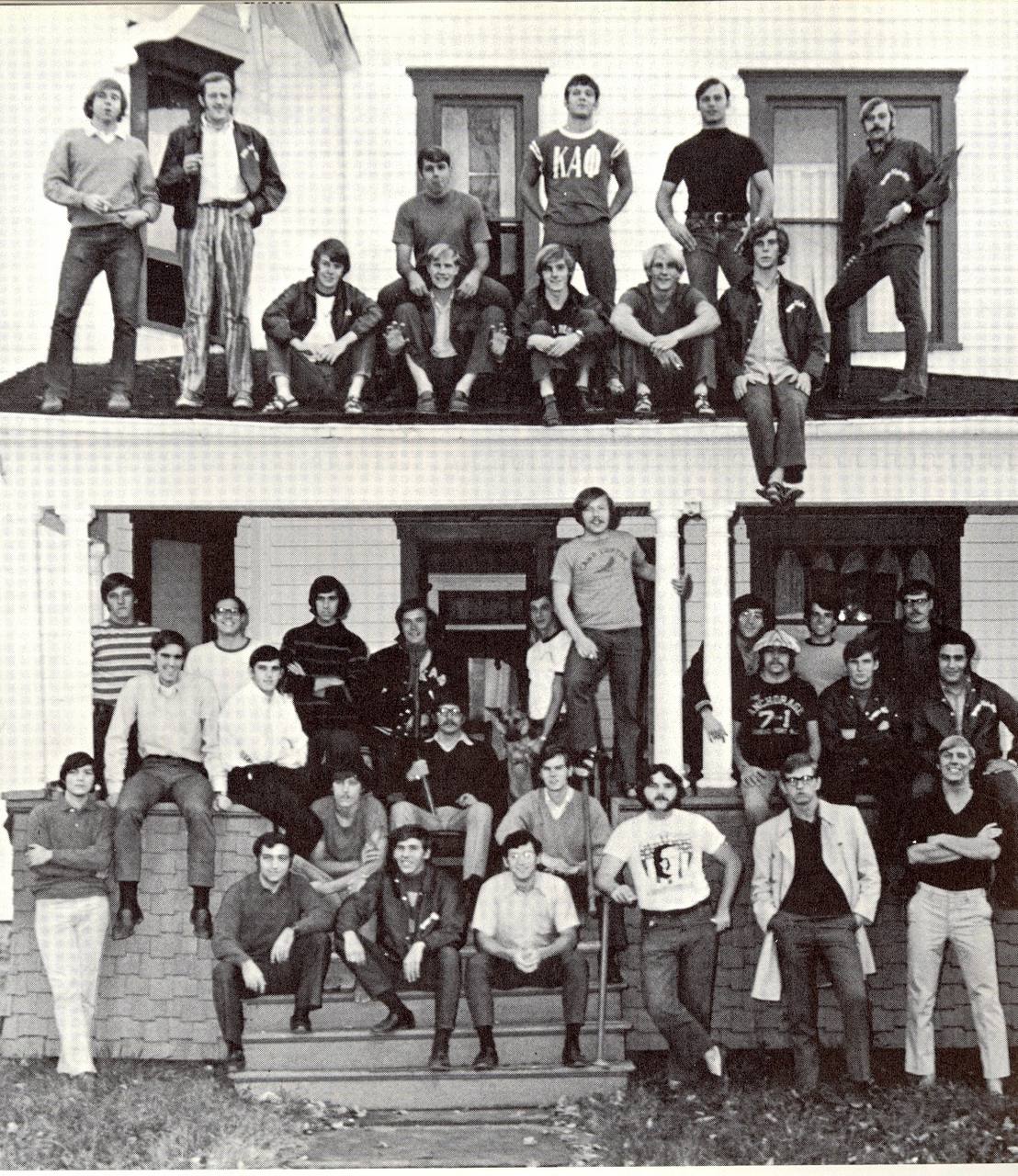
Early Greek societies formed around their members’ extracurricular interests. Their meetings and dealings took place in secret — often held in the boarding houses where students lived during the college’s early years.
Near the end of Ketler’s life, several student clubs and organizations began to form, allowing the college’s oldest surviving fraternities — Pan Sophic (1911) and Adelphikos (1913) – to blend into campus life more readily.
“The PANS were able to fly under the radar because they formed as a club. There were lots of clubs forming around this time, so it was a little bit easier for them to do this. They were founded as a group of men studying the Greek philosophers,” Walczak said.
Upon taking office, the college’s second president, Dr. Alexander T. Ormand, officially recognized these fraternal societies and permitted the formation of others.
Like their older counterparts, later Grove City fraternities would form around the shared ideals and interests of their members. The brotherhood of Delta Iota Kappa, for instance, was established in 1916 by members of the college’s military training program and Grove City’s established national guard unit, Company M. Others, like Epsilon Pi and Omicron Xi (founded 1919 and 1948, respectively), formed around the bonds made by soldiers returned home from World Wars I and II.
While each of these fraternal societies grew out of their own unique circumstances, their goal of providing personal and professional development to students unites them all.
“The college experience is an amazingly unique time in the lives of young men as they learn to understand who they are and what they stand for,” Associate Professor of Management John D. Smith ’88 said as he reflected on his time as a member of Epsilon Pi.
“I have leaned on these experiences all my adult life. They helped me learn how to set high standards for my actions, but also to care for others. It is amazing after all this time, how much my brothers mean to me to this day,” Smith said.
While the college’s fraternities were formally recognized in 1913, it would take more than a decade for sororities to receive the same recognition. Despite this delay, female student societies continued to meet in secret as their male counterparts had before.
“One sorority was founded in secret in 1917. These brave women met in candlelight as to not be caught. They were the sisters of the Sigma Sigma Sigma sorority. They would later be forced to change their name to Zeta Zeta Zeta due to a copyright lawsuit from a national sorority,” Walczak said.
Walczak, a Tri-Zeta alumna, now serves as the sorority’s advisor and continues to help the wider Greek community preserve its storied history.
The sisterhood of Gamma Chi would also form under the cover of secrecy in 1919, originating as a society for town girls. In 1924, the college officially recognized these sororities and permitted the formation of others in the same tradition.
Like the fraternities, the sororities offered their members community and camaraderie. Career Services Office Manager Heather Carothers ’88 fondly remembers her time as an Alpha Beta Tau active and the meaningful connections the group afforded her.
“Greek life was alive with energy while I attended GCC. Social events, Bible studies and study groups were just a few of the fun and enjoyable opportunities that enriched student life during the late 1980s,” Carothers said.
“I was blessed to become a member of the ABT sorority my freshman year. Coming to the Grove from California, the ABT’s truly gave me a group of wonderful sisters who blessed me with friendship, support and shared Christian values,” she said.
The college’s trademark independence extends to its Greek groups, none of which are affiliated with national or international fraternities or sororities.
The Grove City College Greek community enjoyed roughly 75 years of steady growth and popularity before facing challenges in the 1980s and ’90s. With hazing laws tightening nationally and the college ending local off-campus housing, Greek life took a hit. Some groups lost charters for running afoul of college rules, and others saw membership challenges. Membership caps and block classes were introduced during this time, and those changes continue to affect the modern Greek community.
Today, Greek life continues to strengthen its commitments to authentic fellowship and campus involvement, remaining true to the values that facilitated its founding. The community’s focus now rests on increasing camaraderie among its member groups — with the PanHellenic and Inter-Fraternity councils working to create this collective unity.
While the college’s modern Greeks no longer gather in secret or meet by candlelight, the history and traditions of their societies continue to shape their practices today. Greek life’s continued commitment to Christian fellowship and philanthropic investment makes it an indispensable asset to the Grove City College community, and young men and women raised in its embrace perpetuate its mission.