
By Zachary Kappel · Contributing Writer
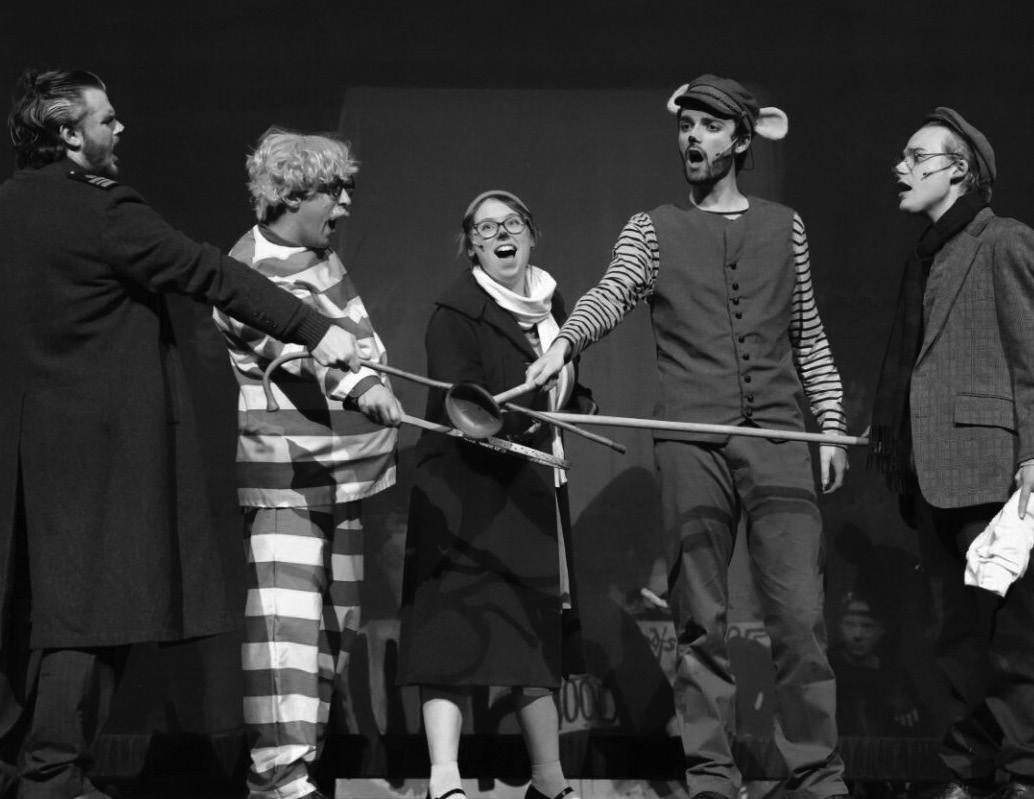
My name is Zach Kappel, and I played Mr. Toad in Grove City College’s production of “The Wind in the Willows.” Admittedly, I was not too surprised at the response to the underlying message of the fall musical. I am glad the show was well received in terms of the performance itself. The stage crew, my fellow castmates and the directors all worked tirelessly on this production. But it goes without saying that the script’s message is worthy of thoughtful debate.
Back in September, after the musical was announced, the Theatre Program had a watch party for the show. The purpose of the watch party was to give those who were considering auditioning an idea of what the show was about.
“The musical version of ‘The Wind in the Willows’ does not leave us without hope for redemption.”
and who they might want to audition for. A lot of would-be castmates and stage crew expressed concern with the show’s message, and rightfully so: Toad doesn’t learn anything.
Contrary to the original story, in which a humbled Toad heartily and honestly changes his ways, the musical concludes with Toad flying into the finale and singing a reprise of how wonderful he is. Considering his reckless behavior throughout the show, he has gone utterly under-punished. His poor friends stand by and sing with him, creating an ending that feels like, “Ho ho … classic Toad! Causing thousands of dollars of property damage yet again!”
Is this the kind of message our Theatre Program ought to carry? Would a program that strives to perform only the most timeless and virtuous stories allow for a show with hardly any message at all? In thinking about this with my castmates, I determined that this show does have a message of value.
One of the most important lines in this show, emphasized in both the West End’s and the college’s productions, is spoken when Rat acknowledges that Toad has not learned anything. Toward the end of the show, Rat is about ready to give up on Toad. Toad, for his part, wants everyone to shrug off the weight of his adventure and not reflect on anything that just happened: the damage caused, Toad’s devious escape from jail, etc.
Rat turns to Toad and says coldly, “Oh, Toad. Has this experience changed you at all? I thought not.”
Rat has stuck it out for the entire show with this rather absurd friend of his. His patience wanes as Toad continually remains a problem for everybody around him. I would like to offer that, even though it is different from the book’s ending, this adaptation shows the virtue of patience to our friends.
No, not empty patience that waits on nothing, but the patience that genuinely hopes for revivification and chooses to forgive; that holds out a while longer for our friend’s redemption that we may not see on this side of paradise. Nothing Toad does is meant to earn our sympathy. Our sympathy is for Rat, Mole and Badger as they stick it out and continue to support Toad.
Toad is supposed to be the extreme of that friend or family member in whom we may not see change; we would very much like them to repent and admit their wrongdoing, but we are sometimes forced to swallow our own pride and still be there for them.
This show does not leave us without hope for redemption.
In the finale, it’s springtime again, the established season of renewed strength in which there are new beginnings. Spring is a revival of sorts for all the animals in the wood. During bows, the cast sings a reprise of “A Friend is Still a Friend,” the song that highlights the message of enduring friendship, in which the lyrics offer hope in the lines, “And at our journey’s end / I hope all rifts can mend / On love you can depend / A friend is still a friend.” Hope for a mended wood remains, as does the hope for the restoration of our friends.
While I can understand that this show can come off as a cynical social commentary (I won’t put that past the writers), I went into this performance believing that patience that endures trial is a great virtue that Toad’s friends possess.