
By Liliana Shadlow · Contributing Writer

WIKIMEDIA
Something I’ve found writing for the college paper is that trying to cover a news story rarely leaves you with material you can use in the news.
News stories are designed to be informational, unbiased and should “tell it like it is,” but catching people on the street and holding spontaneous interviews rarely leaves a reporter with untainted facts.
Last week’s edition of The Collegian contained what could have been a controversial story: a piece on Megan Basham’s recent speech at the college. But compared to the information gleaned while conducting interviews about the event, the story itself seemed a bit milquetoast. (I can say that because I wrote it.)
Luckily for interested readers, The Collegian offers more than just a news section.
Before I can dive into the hard-hitting opinions on Megan Basham that I collected but left out of my last article, I need to give you a brief history lesson on Basham and Grove City College.
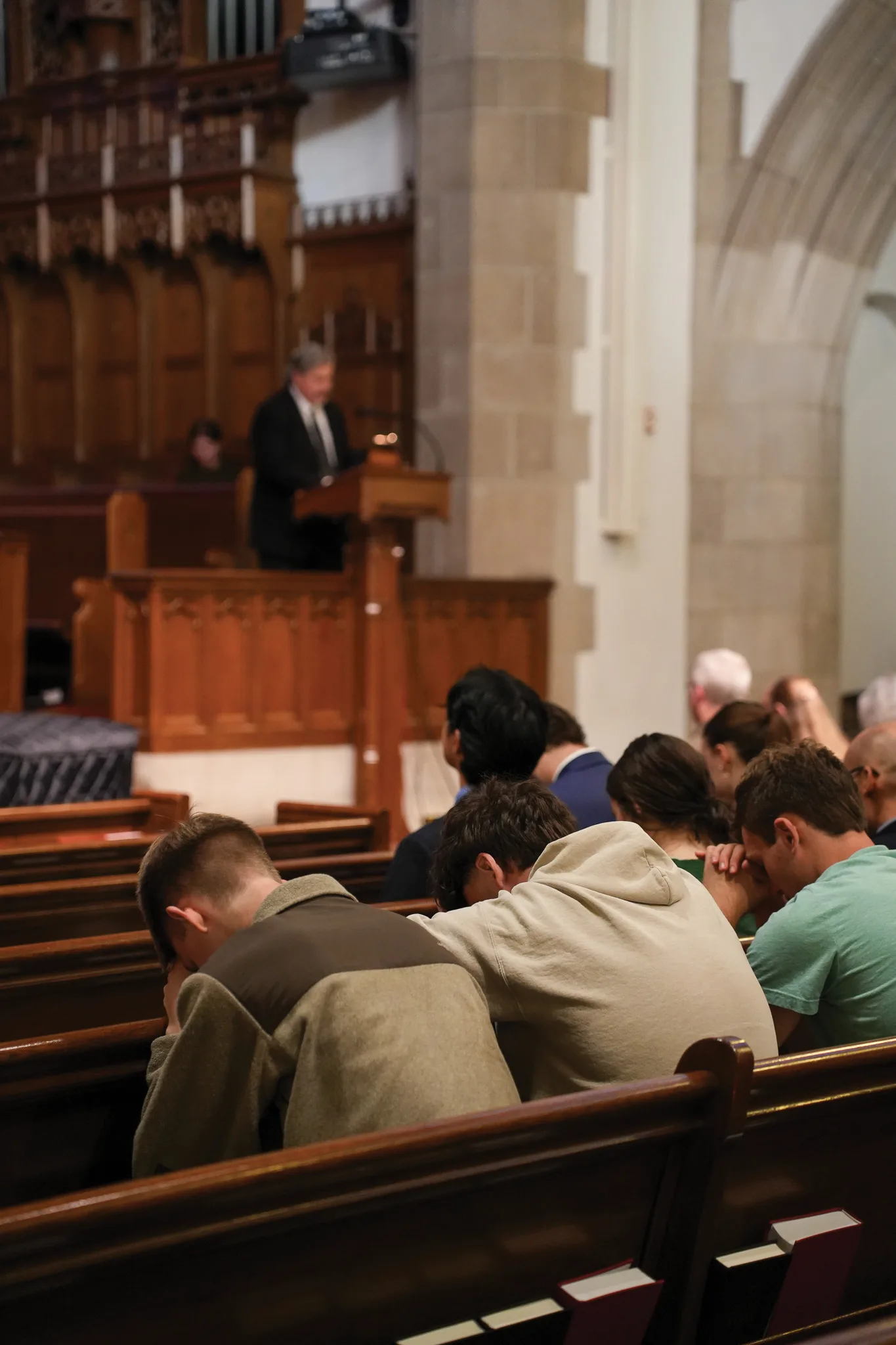
In October 2020, during a regular Wednesday chapel service, a guest lecturer named Jamar Tisby spoke on what he called “The Fierce Urgency of Now.” His 20-minute lecture took a passage from the book of Esther and used it to speak on Martin Luther King Jr., the Black Lives Matter movement (of which he did not express either clear support or disapproval) and how the racial tensions of the day are what could be called “such a time as this.”
“We are living in the modern-day Civil Rights Movement,” Tisby said. “Freedom, justice and democracy, especially for black people and other people of color, are in imminent danger.”
Inspiring words? Inappropriate for a chapel message? Regardless of your knee-jerk reaction, you could probably find another person on campus who feels the same; his lecture received very, very mixed reviews.
In 2021, parents, students and alumni filed a petition opposing his message and a handful of Grove City course materials, student trainings and coursework they believed went against the principles the college stood for.
When the Grove City College Board of Trustees released a report condemning teaching what it labeled “wokeness” and “critical race theory,” a second petition was released that encouraged Grove City to apologize to Tisby and “not censor or silence viewpoints or perspectives that promote understanding the world around us.”
Are you feeling the controversy yet? It gets even more complicated. This entire scene was brought into the national spotlight by a handful of notable Christian figures, authors and reporters, one of whom was, you guessed it, Megan Basham, a journalist and podcaster for The Daily Wire.
In 2022, she drew attention to the report the board published, saying it addressed the issues at hand and was comprehensive in its analysis. Basham then touched on the Grove City controversy in her 2024 book, “Shepherds for Sale,” where she listed Grove City as a school that fell victim to progressive ideologies but got back on the right track.
This September, the story came full circle. Basham, despite openly criticizing Grove City a few years ago, came to campus as part of the Institute for Faith and Freedom’s Conservative Mind Lecture Series.
In speaking with students before and after the event, it seemed most had no idea who she was. However, among faculty, it was a different story entirely. Everyone I spoke to knew the name “Megan Basham,” and, surprisingly, it wasn’t from the lecture series.
Many professors felt Basham and other journalists blew things out of proportion and caused the college permanent damage.
One faculty member referred to Basham as being “wrapped up in the Christian nationalist movement,” while another said she was “divisive” and “dehumanizes people.” Another faculty member said that Basham’s performance as a reporter is “nothing but shock value; it’s fear.”
Another faculty member said having Basham on campus was a poor choice, regardless of whether she spoke on the controversy in 2022, saying that she uses her platform to accuse people of being “wolves” (in reference to her book) simply for being connected to other problematic people. “She gets facts wrong,” the professor told me, “and she talks wrongly about other people.”
One faculty member simply referred to the entire event as “odd,” saying, “I’m not surprised the Institute for Faith and Freedom brought her, but I am surprised Grove City brought her.”
Faculty also expressed concern about what associating with Basham said about Grove City College. “So many people that she’s criticized are good people,” one professor said. “By extension, by platforming her, we’re agreeing with her.”
But not all faculty were concerned with her coming to campus. “I’m encouraged by her coming to campus … her coming here is a sign of her endorsement of us,” said one.
One student said hosting Basham on campus was a good sign of progress on behalf of the college, and that bringing her to campus allowed her to reevaluate Grove City as an institution.
Basham herself said she felt well-received during her time on campus, referring to Grove City students and faculty as “so gracious” and “welcoming,” while also saying she was very pleased with Grove City as an institution.
So, what do I think? I think I’ll keep reporting and interviewing and leave you intelligent readers to formulate your own opinions. When it comes to Megan Basham, that is something we certainly aren’t lost on.