By Randall Elvin · Entertainment Editor
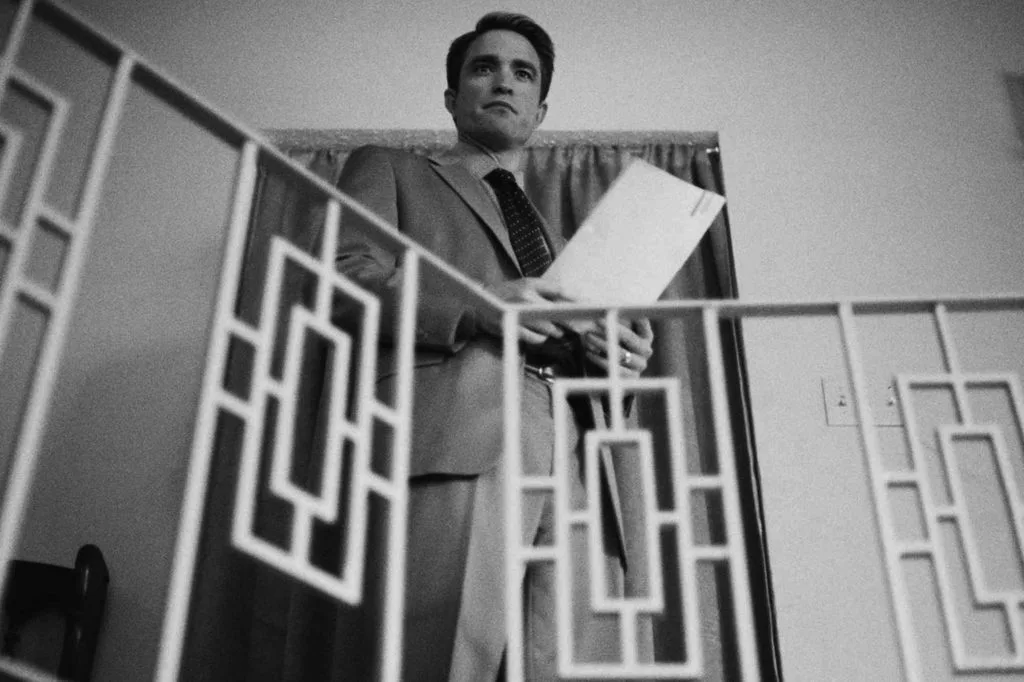
Anyone who has watched “To Catch a Predator” will remember hearing these lines: “Why don’t you have a seat over there?” “You see how this looks, right?” Chris Hansen would sit across from a shaky man and read back his online messages while surrounded by cameras eager to capture every aspect of his meltdown.
Directed by Lance Oppenheim and released by A24, “Primetime” is a satirical drama thriller about fame, obsession and evil. Set in 2006, the movie follows Hansen as he tries to get “To Catch a Predator” into primetime television, with ratings and network pressure constantly hanging over the production.
Robert Pattinson plays the role of Chris Hansen, and his performance alone makes the movie worth watching. Pattinson has already shown his range in films such as “Tenet,” “The Lighthouse” and “The Odyssey.” He will also appear in the upcoming film “Dune: Part Three.”
In “Primetime,” Pattinson disappears, and Chris Hansen appears.
Whenever Hansen enters a sting operation, he struts in like a superhero. Pattinson sells every second of Hansen’s ridiculous confidence. The problem is, the more he believes in his own image, the more unsettling he becomes, and the movie does very well in showing this struggle.
“Primetime” never allows Hansen to be a clean-cut, morally sound hero. Hansen has his own flaws, like his failing marriage and his celebrity status getting to his head. In his mind, he truly believes he is the person to judge evil. Throughout the movie, Hansen faces the question of who gave him that authority.
The movie opens with Hansen clearly caring about the ratings of the television show and appeasing NBC, the show’s network. At the same time, it shows his hatred for the people he believes represent true evil. Hansen tells the story that changed everything for him and explains how he came to see evil as a force he had to fight.
Hansen genuinely seems to want to catch terrible people, but he also wants the biggest show possible. Without a strong rating, how can he keep his show going? If he doesn’t go for the biggest stories, why would people tune in? During one scene, he insists on waiting for a perpetrator and will not rest until he is caught. Is he doing it to protect the kids or to be the biggest star? “Primetime” never gives the audience a clear answer about which motivation matters the most.
But “Primetime” does not just talk about evil and struggles. It forces the audience to sit in it.
Hansen pursues disgusting predators throughout the movie, and “Primetime” forces you to feel immersed in the shock of it. The camera constantly cuts to abnormally close shots, making it difficult to distance yourself from what is happening. Chat logs from the predators are read out loud in a disgusting manner that feels like they are being read right into your ear. There is no easy way to look away. The movie makes you face the reality of what these predators are willing to say and do. “Primetime” separates itself from a traditional movie. It does not simply tell you these people are disgusting; it makes you experience the discomfort of facing them, and that’s what sets it apart. Movies do not always have to fit the typical mold. “Primetime” does not move neatly from A to B, and it does not give you a clear character arc with a simple resolution. It is strange and unsettling. Movies do not always have to be comfortable. Sometimes they can be an experience.