Another perspective on AI and education
By Anastasia Brown · Community Editor
GCC
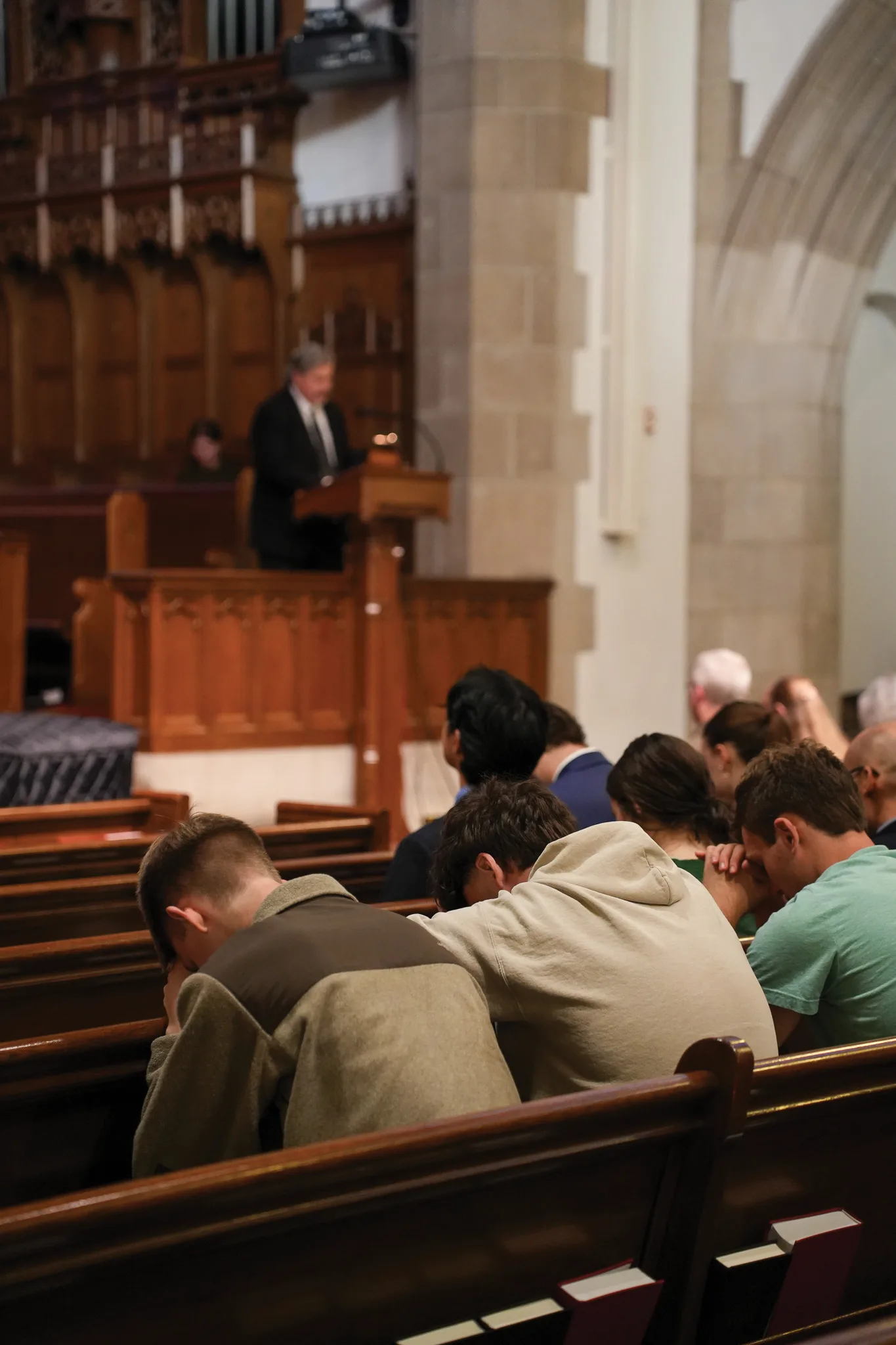
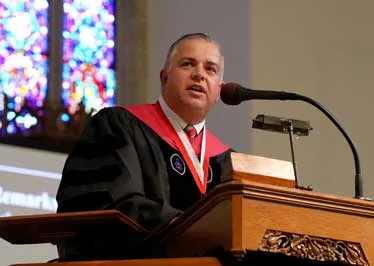
“As we begin this new academic year, together we face a question that is both new and old,” President Lingo said to students and faculty in the chapel Aug. 26 during his Convocation address.
He drew comparisons between the essay “On Living in the Atomic Age” by C.S. Lewis (the freshmen are being introduced early on to our patron saint) and our own 2026 concerns with the AI Age.
In the essay, Lewis uses the same logic as Lingo — human history is full of people facing unprecedented change but somehow carrying on with everyday life. Plagues, Vikings, cancer — they could have defined historic ages. But the men and women we remember in our history books usually aren’t the ones who cowered in fear, but the ones who carried on living, creating and discovering.
It’s a call to action. My favorite quote from the short essay comes at the end.
“If we are all going to be destroyed by an atomic bomb, let that bomb when it comes find us doing sensible and human things—praying, working, teaching, reading, listening to music, bathing the children, playing tennis, chatting to our friends over a pint and a game of darts—not huddled together like frightened sheep and thinking about bombs,” Lewis says (and Lingo quoted in his speech), “They may break our bodies (a microbe can do that), but they need not dominate our minds.”
Lingo’s call to the college was to actively refuse to let AI dominate our minds.
“As I told our students, that paper matters. But the person our students are becoming in writing the paper matters more. AI has great promise to accelerate calculations and help with research and invent breakthrough technologies, but it can’t tell a student what is worthy of their life,” President Bradley Lingo said later in the week to WKBN First News, which came to the college to survey the campus about perspectives on AI usage.
The WKBN segment also mentioned our dearly beloved The Collegian and the AI survey we conducted last spring, which showed that almost 50% of the student body has negative associations with AI.
WKBN also interviewed several students, including senior Elleri Bayhan, whose thoughts have stuck with me.
“I think that (AI is) a blessing, but it’s also kind of a curse,” she said. “Like, we’re made in the image of God, and we really want to use our creativity because we know that God is creative.”
Of course, AI can’t take away our ability to be creative. We must first give it that power over our lives. But AI does make the implicit claim that creativity is cheap and worth sacrificing on the altar of efficiency. This joke from author Joanna Maciejewska has made its rounds on social media.
“I want AI to do my laundry and dishes so that I can do art and writing, not for AI to do my art and writing so that I can do my laundry and dishes,” she said.
But then we use AI to “help us brainstorm” a project for class. We use AI to create our posters for campus events. (I am looking at you, Theater Department.) We use AI to understand our homework problems rather than popping into a professor’s office hours. (We know that professor talks a lot, and we don’t want to pause from the grind.)
Are those uses of AI inherently evil? No. Most likely, nobody will kick you out of school for plagiarism or give you a failing grade. Sometimes, it might even prove helpful. But where will we draw the lines for ourselves? When are we truly using the technology to aid us in the pursuit of knowledge, and when are we prioritizing completing a paper before a certain deadline over the creation of our own souls that is happening as we write (or don’t write) that paper?
It’s a compelling question for all of us, no matter where we stand on the AI question. Thanks, President Lingo and St. Lewis!