By Mia Gallagher · Celebrate 150 Correspondent
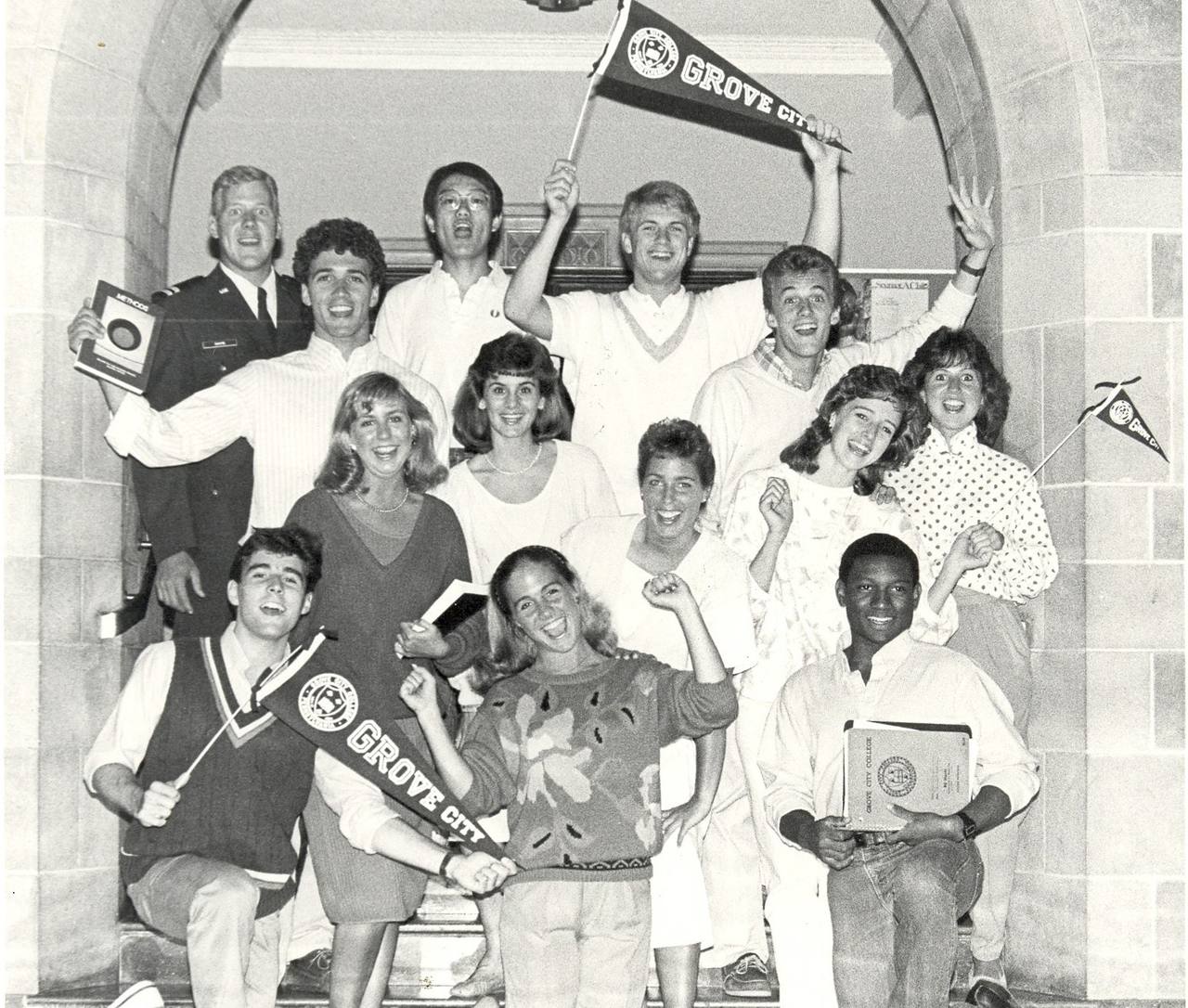
Most religious students. Friendliest students. Happiest students. Best quality of life.
Four labels. One incredible college community they represent.
At the outset of the 2025-2026 school year, the Princeton Review ranked Grove City College highly in the four categories listed above. To an outsider, it may be difficult to understand how one small, liberal arts college in Western Pennsylvania could cultivate such an esteemed community.
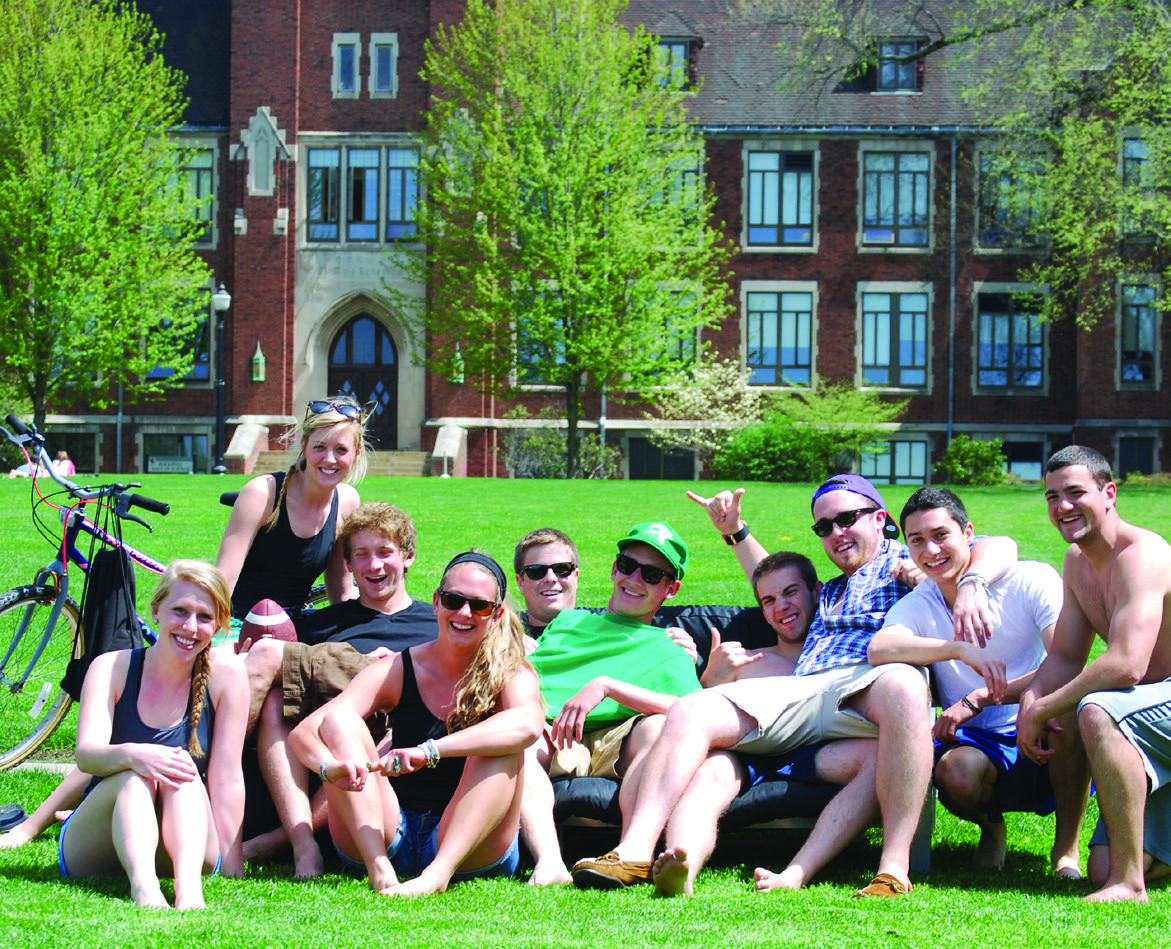
But to Grove City College students, faculty, staff, alumni and friends, the answer is quite clear. With its historical emphasis on intentional fellowship and Christian formation, the college has created an inviting community — one that truly feels like a home away from home.
How exactly did the college build this tightknit, renowned community?
An easy answer would be its on-campus living requirement, whereby all undergraduate — non-commuter, non-married — students must live on campus during their four years at the college.
This modern staple of the Grove City College student life tradition, however, did not begin for most students until the 1930s. In the college’s early years, there were no dormitories, so students either lived in town or rented rooms in boarding houses.
Gradually, Colonial, Memorial, MAP South and Ketler were built, which allowed students to move onto campus and establish the campus living tradition. Once enough dormitory space became available to house the entire student body, living on campus became a requirement.
“Even after WWII, they created veteran’s housing roughly where PFAC is now. They were basically small quickly built houses for the married veterans and their families to live so they, too, could be on campus,” Director of College Archives and Galleries Hilary Walczak ‘09 said.
“Very rare exceptions were made. There was only a small window of time in the late ’60s early ’70s where there was some off campus housing, mostly for Greeks. But it wasn’t much. And this ended in 1981,” she said.
“The effect it had is that it created a community on campus. The students live and grow together. When you are eating, studying and living together, you get to know each other. You form a community and a bond. That isn’t really something you have at a larger school where people are living in apartments and only showing up for class and may only know a few people who are in their major,” Walczak said.
While the on-campus living tradition gradually took hold over time, another key aspect of the college’s vibrant student life — its clubs and extracurricular organizations — are as old as the institution itself.
“Clubs flourished in the early 1900s, but they were around from the start. They started with the founding of the college; we just don’t know much about their history because we don’t have a ton of records,” Walczak said.
A few of the earliest student organizations were the Webster Debate Club and the Shakespeare Club, which were both founded in 1878. The Collegian, first published in 1891, grew out of a publication by the Webster Club.
The college’s varsity athletics tradition kicked off with baseball in 1884 and football in 1892. And in the 1910s, Greek life officially began with the recognition of fraternities (Pan Sophic and Adelphikos) and sororities (Tri-Sigma and Gamma Chi).
While other organizations have since added and have had time to evolve, these early extracurricular communities have helped cultivate the unique student life tradition the college enjoys.
For decades in the 20th century, a tradition of gentle freshmen hazing provided a bonding experience for students. Well into the 1970s, all freshmen were required to wear a “dink” – a tiny red cap with a white G – and a sign around their necks with their name, hometown and dorm assignment for the first six weeks of the fall semester. It looked silly, but it was a shared humiliation that built community.
Because of the tight-knit community on campus, it’s easy to slip into the “Grove City is a bubble” mentality. In truth, however, the college has been greatly shaped by world events taking place around it.
During World War I and II, the college partnered with the federal government to help train recruits for the battlefield, which affected campus life at the time.
“After Pearl Harbor, we lost nearly 50% of the campus population. The college, knowing the impact it could have, having already done so during WWI, contacted the government and became a war training school,” Walczak said. “Every three months, about 1,000 guys would come on campus train for three months then leave for the war. We also started to train nurses towards the end. Due to the efforts, we had a Victory ship named after the college.”
Later, during the 1960s and ’70s, the college felt the effects of the cultural revolution — although not to the same degree as other higher education institutions at the time.
“Our students weren’t naïve to the world around them, and the college brought in a diverse group of musicians and speakers. Musical groups like Alice Copper, Simon and Garfunkel, Kansas, Rush and Don McClean performed on campus. Speakers like Vincent Price and Maya Angelou and members of the growing modern conservative movement, like William F. Buckley Jr. or Austrian economist Ludwig von Mises, also visited and shared their views,” Walczak said.
“The college still had some Vietnam protests, like students wearing black arm bands in protest to the draft and the loss of life of their friends in Vietnam but nothing in comparison to other schools like Kent State. And of course, Grove City continued to have organizations on campus that were mission-based and that were rooted deeply in their faith,” Walczak said.
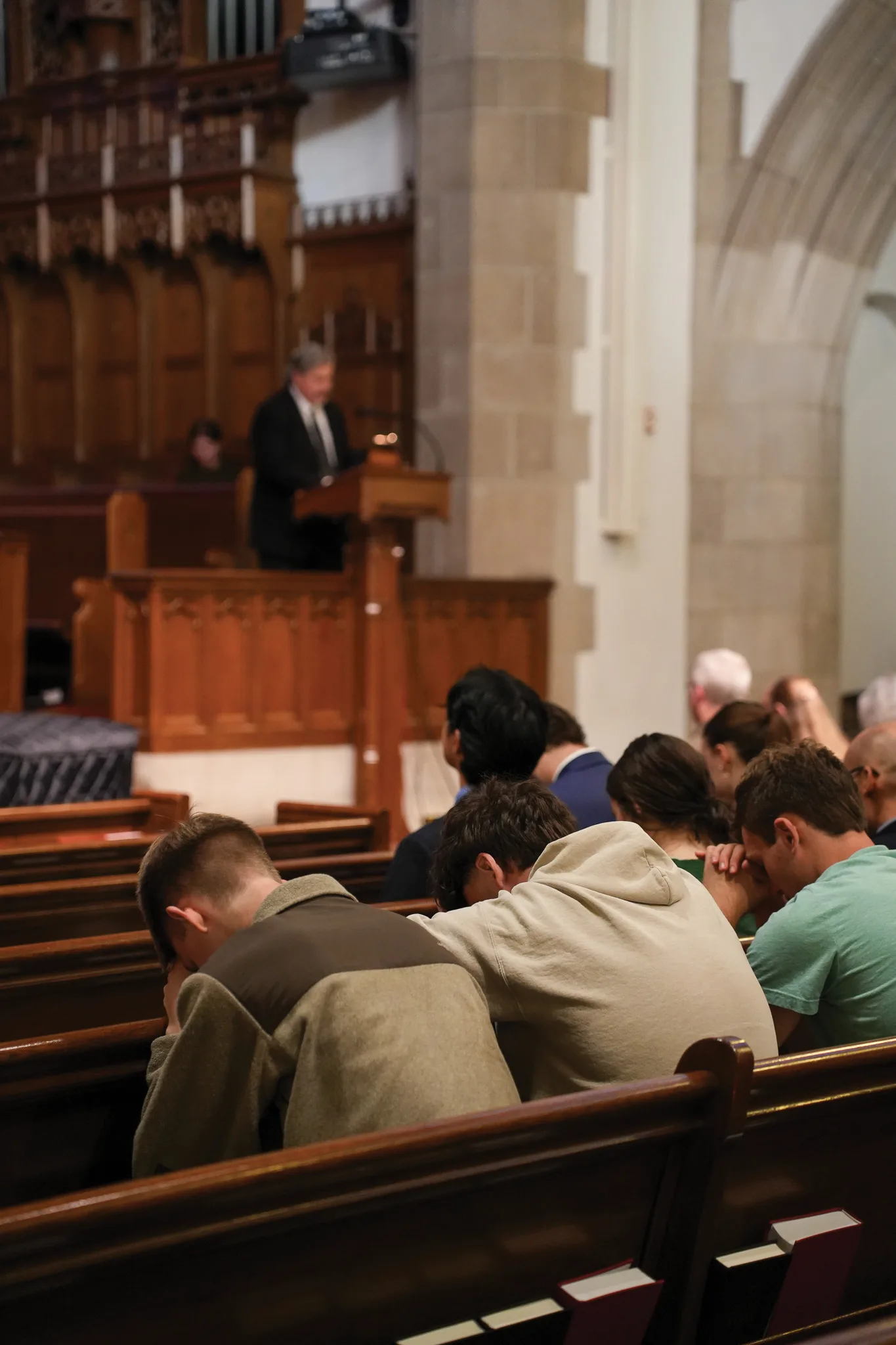
Faith and freedom has proved to be one of the most enduring aspects of Grove City student life. This tradition — established early by Isaac Ketler, who personally supported missionaries around the world — continues to be a rallying point for the Grove City College community, past and present.
“Yearly, the college would support students and alumni who were on missions. Red Box was founded in 1976. And there have been numerous outreach groups that focus on more locally based work,” Walczak said.
“Young Life and New Life were both founded in the ’70s. Polk Christian Outreach was founded in the 1950s. The list goes on and on. And of course, it’s no new thing for students to spend their spring break on an ICO. That goes back decades as well,” Walczak said.
It is this faith tradition that has helped the college get through the most difficult moments. While one of these moments — the COVID-19 pandemic, which began six years ago today — did its best to bend the Grove City College community, it remains unbroken. And as campus continues to recover from the pandemic’s isolating effects, its vibrant student life tradition will continue to inform how some of the nation’s happiest and friendliest young people train for what comes next.