By Mia Gallagher · Celebrate 150 Correspondant
“Grove City College recognizes the priceless value of our freedom. It knows that freedom is made up of many parts: religious, social, economic, political and individual. It knows, too, that freedom is indivisible; that when any one of these parts is taken away, that which remains is no longer freedom.”
Like many of the college’s key historical figures, former Board of Trustees Chairman J. Howard Pew saw Grove City College as a pillar of faith and freedom in a broken and tumultuous world.
And like its motto, “lux mea,” the college is called to illuminate this world with the radiant values it stands for — faithfulness, excellence, community, stewardship and independence.
Forty-four years ago, Grove City College’s commitments to faith, freedom and its values were challenged. The college’s decision to fight to uphold these commitments is a key inflection point in its history and continues to influence the higher education landscape today.
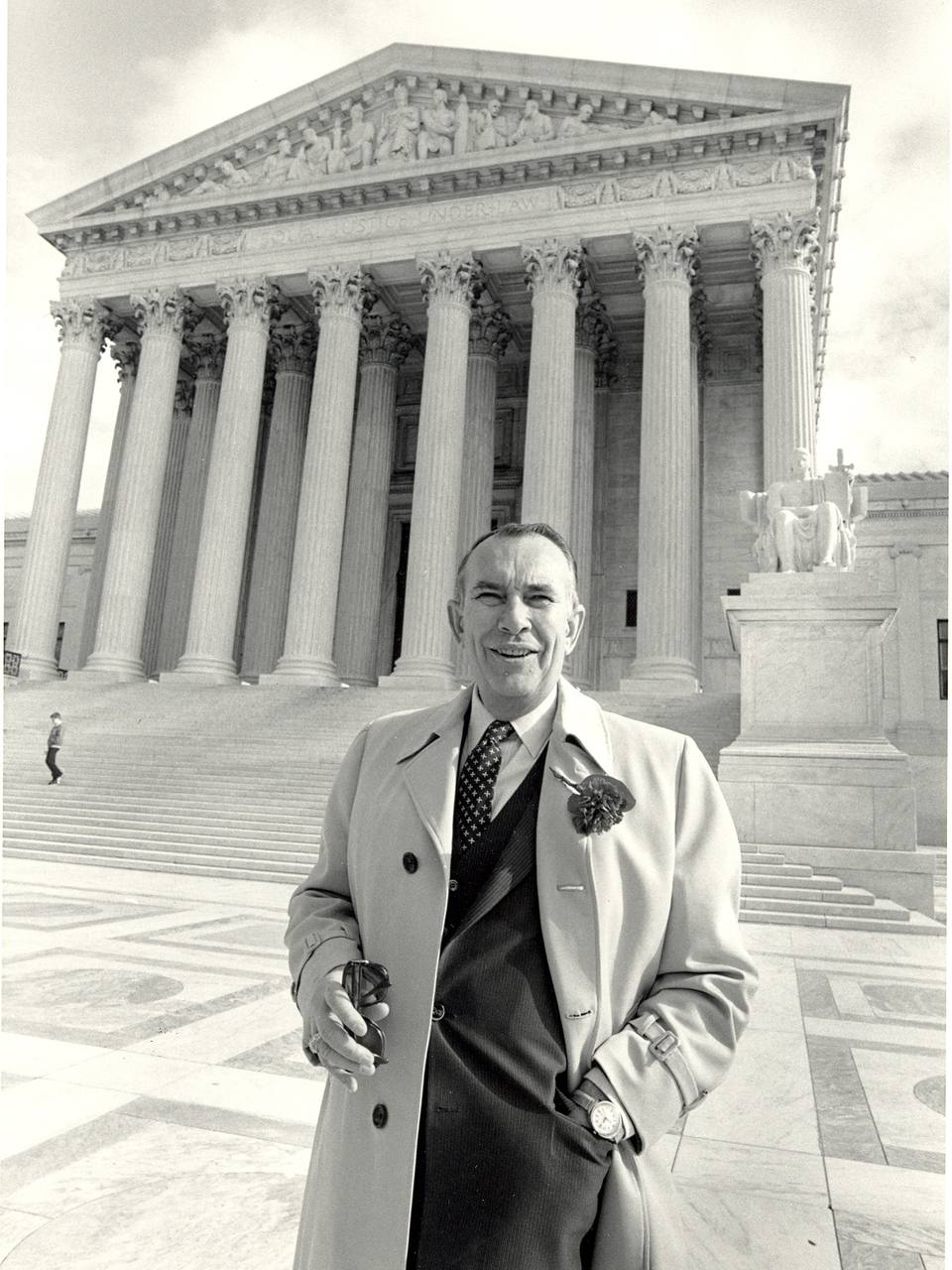
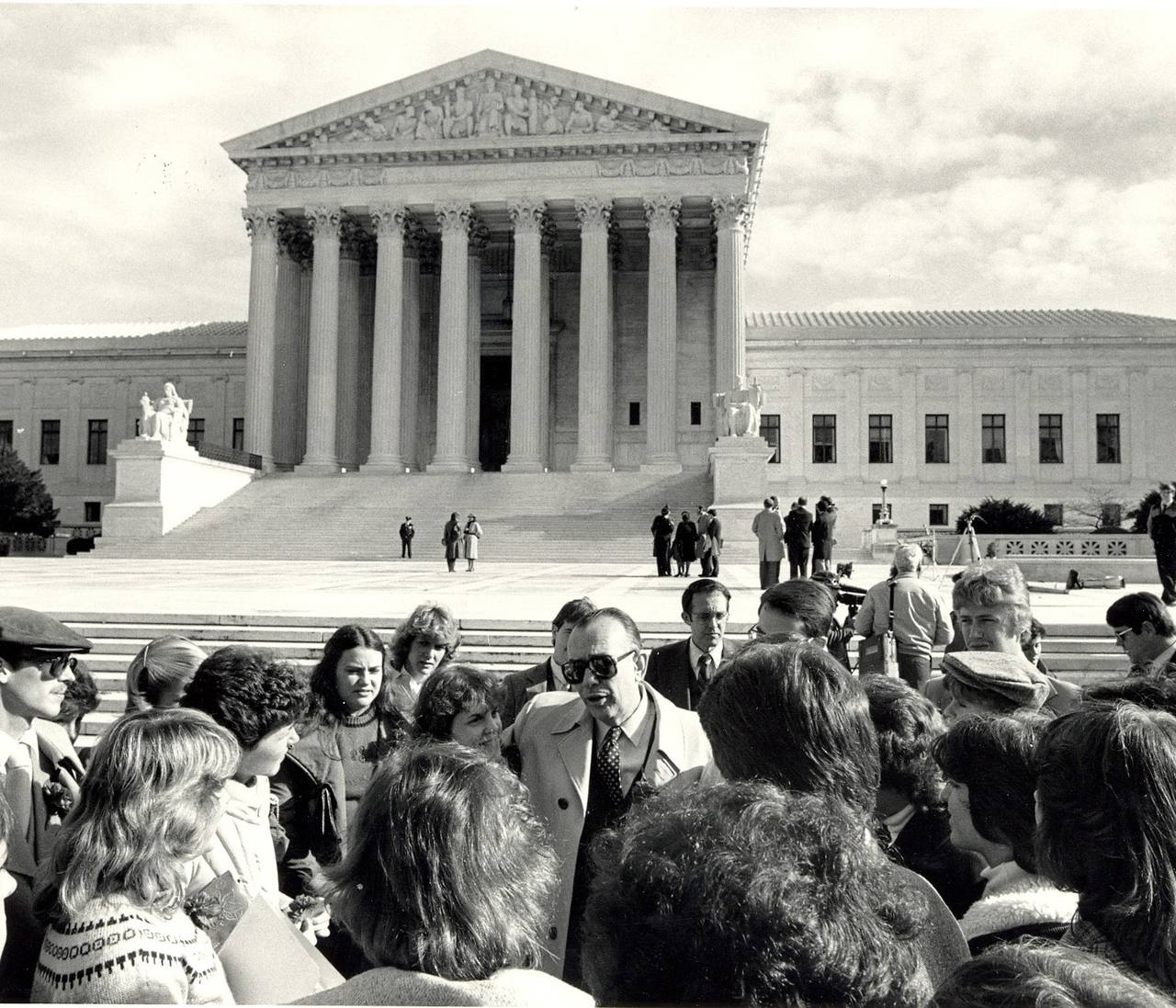
On Feb. 28, 1984, the U.S. Supreme Court issued a decision in Grove City College v. Bell — a legal battle that began almost a decade earlier when then-President Charles S. MacKenzie refused to sign a federal Title IX compliance form assuring the federal government that the college wouldn’t engage in gender-based discrimination.
To the rest of the country, MacKenzie’s refusal to officially sign off on Title IX was baffling — especially considering the college did not oppose the law’s intent and had never discriminated against women or anyone else.
So then, what was the problem? College leaders saw the government’s demand as a threat to Grove City College’s institutional liberty: its ability to teach what it wanted the way it wanted to.
“The government was essentially asking Grove City College to sign a blank check for its own future and its freedom. So, this was really much more of a question about whether or not there would really be meaningful independence and private enterprise when it came to the issue of higher education,” former college President Paul J. McNulty ’80 said in a 2014 interview.
“The resistance of Title IX aligns with Grove City College’s historical values of faith and freedom in the idea of maintaining its independence as a private college. They feared government inference would impact the college’s ability to make decisions that were in the best interest of the college and its mission in the future as they didn’t know what the law could eventually become,” Director of College Archives and Galleries Hilary Walczak ’09 said.
The federal government threatened to withhold funding from colleges and universities that didn’t sign off on Title IX. But since Grove City generally eschewed taking taxpayer money – training programs for service members during the world wars and some New Deal funding for Ketler Hall’s construction were among the very few exceptions – that threat initially fell flat.
But in late 1977, federal student grants and loans were formally recognized as aid to the college. The college didn’t see it that way, arguing that the aid went to students, not the college, and sued the Department of Education over the determination. What started out as standing on principle for self-determination evolved into a lengthy legal battle over the college’s right to autonomy and financial freedom for its students.
In the fall of 1983, the case found its way to the Supreme Court. Although the college fought hard — doubling down on its refusal to take federal assistance and emphasizing the injustice perpetrated by revoking student aid — the Court delivered a split verdict: Student grants and loans were federal aid to the college, but the federal oversight only applied to the financial aid office that accepted the aid.
The college was at a crossroads. It could allow students to use federal grants and loans and surrender a little bit of institutional control, or it could stop participating in student aid programs and remain true to its core convictions.
Grove City College agreed to withdraw from federal education grant programs in 1984. In place of these grants, the college developed its own financial aid system, generously supported by the philanthropic contributions of its donors.
“The college wanted to keep the student loans but had to make the choice to give them up. Ultimately, having independence, academic integrity and freedom of religion is important, and being able to maintain that freedom is a victory for the college in the long run,” Walczak said.
The court case was national news, and the verdict prompted the U.S. House of Representatives to pass the “Grove City Bill” in 1984, which required schools taking any federal money to comply with Title IX in all areas of college life. It failed in the Senate but was revived, renamed and approved by Congress in 1988 as the “Civil Rights Restoration Act.”
President Ronald Reagan vetoed the bill, saying he wouldn’t “cave to the demagoguery of those who cloak a big government power grab in the mantle of civil rights.” The veto was eventually overridden by Congress.
Fulling extracting the college from the federal student loan program took until 1996. The college’s ability to accept GI Bill students and continue its long-running Air Force ROTC program were among the casualties.
Dr. Devan Lindey, a history professor at Purdue University, researched the case for his doctoral thesis. Lindey said it had important implications for higher education. “Conservatives learned a lesson in the aftermath: the importance of bankrolling private educational institutions to teach conservative values to a younger generation outside any purse-string interference with federal aid,” Lindey said.
He expressed that it set an important precedent that a few other colleges and universities have followed. “There is a laundry list of colleges and seminaries that follow this model now. The big ones people usually identify are GCC and Hillsdale though,” Lindey said.
In an article commemorating the 40th anniversary of the case, McNulty discussed the case’s impact on the college’s legacy. “Losing the Supreme Court case was one of the best things that has happened to Grove City. It seems counterintuitive to assert that declining federal funding has strengthened the college’s financial sustainability and affordability, but this is truly the case,” McNulty said.
“Our alumni and friends have stepped up magnificently to support the college’s independence and allow us to build a financial aid program that far exceeds what the federal government currently offers and raise millions to replace federal grants for research and facilities,” McNulty said.