
Lessons from 1947
By Madelyn Braho · Staff Writer
What is the benefit of sowing division amongst people? Who gains when people don’t trust each other?
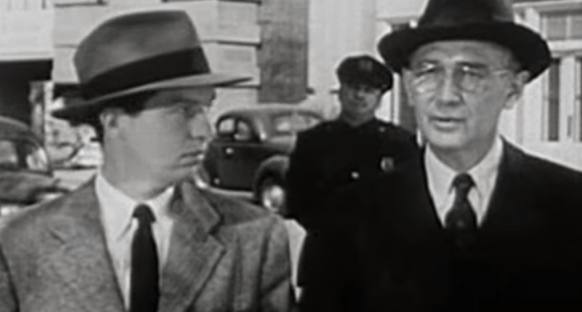
“Don’t be a Sucker” is a 1947 short film by the United States Army. In the film, a loud man standing on a box on the street attempts to convince a gathered crowd that he is a real “American American,” that he knows why things are going wrong and that foreigners are taking jobs that should be theirs.
A young man in the crowd follows along, thinking this sounds reasonable, until he is surprised by one of the groups that is declared not American enough — Freemasons, of which he is one. In his shock, he listens to a professor from Hungary who tells him about a similar scene he saw back in the 1930s and the dangers of rhetoric that tries to break people into rival groups.
Further into the film, one man, an unemployed “Aryan,” the one who had the most to gain from Nazi ideology, dies in Normandy with his family starving, instead of ruling the world like he was promised.
Clips of this film have been circulating the internet since the 2017 Unite the Right neo-Nazi rally in Charlottesville. Even nearly 80 years later, the film serves as a reminder to ask questions about who wants us divided and what they get out of it.
The people who are trying to convince you that your neighbor is your enemy, that you have all the right opinions and that you are one of the few legitimate Americans, isn’t doing it out of love for you. They are not looking for leaders for the glorious future they promise you, only foot soldiers willing to die for the cause while they profit.
Men like Trump and his associates are betting on us being willing to disregard other people’s rights. Systems like ICE depend on us seeing other people as undeserving of dignity, safety or due process. The catch is that once those rights don’t apply to some people, they don’t apply to anyone.
But just saying “don’t trust people who want us disunited” only gives us fewer options of who we can trust.
What if we decided to trust other people? What if we looked for commonality in humanity or in a greater American identity? Perhaps instead of considering liberals, protesters or the homeless our enemies, they are just other people like us.
This won’t be easy considering how much effort has been put into breaking us apart over the years. If we can only conceive of some people as “people we donate money to charity for” or “that person speaking another language loudly behind me on the bus,” we will never be able to consider them fellow citizens in the way we do our classmates or family.
But being able to build mutual trust across these barriers is going to be crucial if we want to heal division. The first thing you must remember is that a stranger is not your enemy.
If we decide to “gamble with other people’s liberty” as the short film’s professor says, we will, as the men in Hungary did, lose our own.