
Memorization brings the past to life
By Olivia Petty · Contributing Writer
What if books didn’t exist? That could be good for society, not because people would read less, but because they would understand more. If books didn’t exist, we’d have to memorize everything to access and share it. Modern education minimizes the value of memorization.
By memorizing more, we would be in constant dialogue with Virgil and Shakespeare, their words permanently stamped upon our minds and ever echoing in our ears. Easily available print sources cripple man’s mental capacity by minimizing the demand for memorization and attention. However, memorizing proves achievable and advantageous. Memorization is achievable. Start with those three words.
“… The brain’s memory storage capacity (is) closer to around 2.5 petabytes (or a million gigabytes),” says psychologist Paul Reber. “For comparison, if your brain worked like a digital video recorder in a television, 2.5 petabytes would be enough to hold three million hours of TV shows. You would have to leave the TV running continuously for more than 300 years to use up all that storage.”
You don’t have to look things up to find answers. Your brain can store more information than many computers.
In an age of instant digital access, shortened attention spans contribute to poorer comprehension and inhibited ability to read and memorize.
“The problem of screens has made people forget — if they ever learned — deep or vertical reading. No one reads more than a paragraph. The size of a screen is your attention span,” English professor Andrew Harvey said.
Memorizing allows you to retain more information than that tiny screen could ever hold. Memorization raises the dead, granting them immunity to “the whips and scorns of time” and the fickleness of OneDrive. Not everyone recognizes the value of the often-grueling process of memorization in an age of iCloud, Safari and SD cards.
Although requiring discipline and attention, the process of memorization proves advantageous. The one who lends ear to the voices of great passages, poems and proverbs by memorizing such sayings keeps alive the spirit of the one who first spoke them. To store up the words of Shakespeare is to be in constant conversation with him. Though bodies perish, ideas flourish when cultivated.
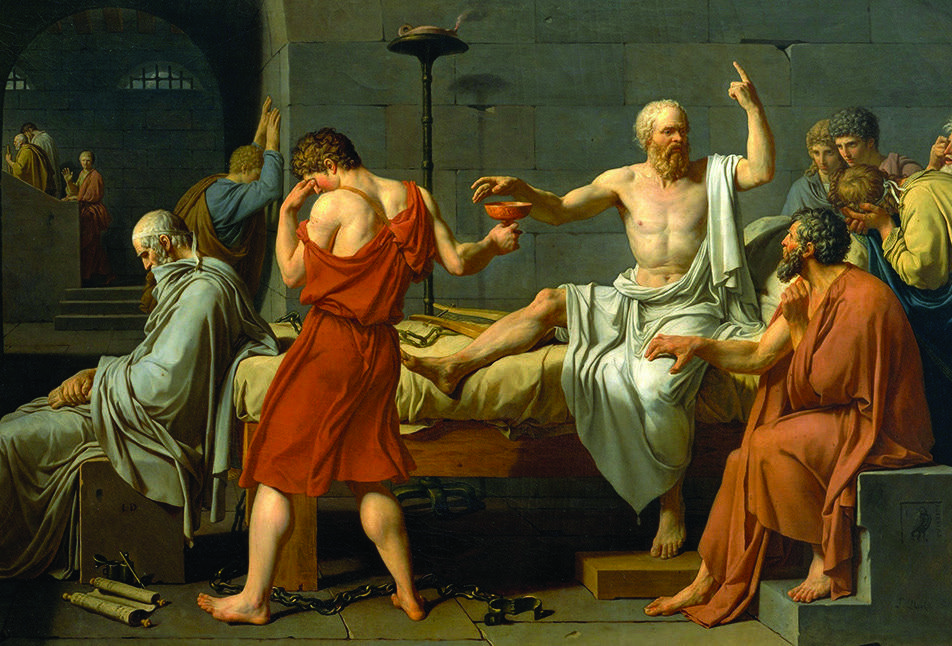
Memorizing a text allows you to know it better. Although books do allow people to know more, “Socrates seems to think that the shift from oral to book culture will make people not know things as well,” Harvey said.
Every time you memorize and recite a speech from Shakespeare, you are offering your audience the opportunity to listen to the dead playwright speak. When you quote obscure lines from Dickens, you are providing your friends with the chance to hear Dickens’ opinion. The great authors live on through the ambitious memorizers.
“The well-educated person, who has a head and heart full of meaningful knowledge, is a better writer, speaker, thinker and servant because he or she has an overflowing font of resources within, ready for access at any time,” Leigh Lowe writes in her article “Repetition, Memorization, Recitation.”
Who wouldn’t want “an army of good words” (to quote Shakespeare) ready to argue or placate, defend or communicate as the need arises? To memorize is to command an army of good words rather than to submit to the tyranny of fickle technology.