Ending abortion will take more than voting for pro-life candidates
By Brayden Rush · Contributing Writer
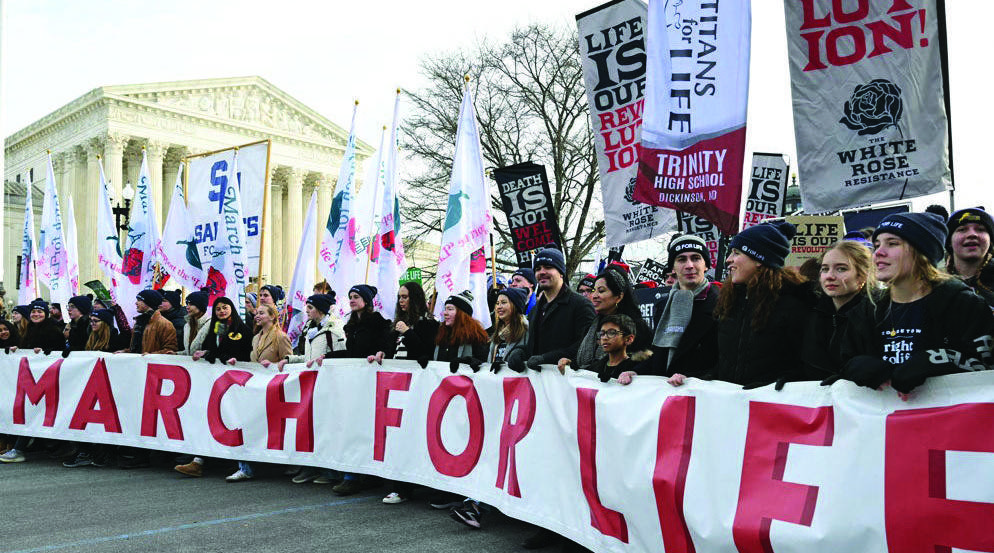
The abortion issue in the United States is far from being settled. Each state has different laws and restrictions ranging from a total ban on abortion, to legal until “viability,” to no restrictions whatsoever. If the goal of the pro-life movement is to completely ban abortion in every state, there remains a lot of work to be done.
The challenge then becomes how to achieve the policy of the abolition of abortion. The seemingly obvious answer is to get out and vote for pro-life politicians, continue to advocate for pro-life policies, continue marching for life and protesting outside abortion clinics. The political strategy seems simple, and it is, but is it going to be effective? The most recent data from Pew Research would suggest no.
The most recent statistics on public opinion of abortion was published in June 2025 and showed 63% of U.S. adults said abortion should be legal in all or most cases. The data then breaks down public opinion by demographic.
Men and women largely agree (for once) that abortion should be legal, with 61% of men and 64% of women reportedly supporting legalizing abortion in all or most cases. When broken down by race, age, education level and religious affiliation, the majority of respondents in each category for every demographic believe abortion should be legal in all or most cases.
The exceptions for the trend in this supposedly large amount of support for abortion are found in white evangelical Protestants (only 25% think abortion should be legal in all or most cases), party affiliation and political ideology as most Republicans and conservatives do not support abortion.
The most interesting trend I noticed was the support for abortion among most religious groups. The majority of white nonevangelical Protestants, Black Protestants and Catholics support legalizing abortions.
The issue is no less of a battle in our own state of Pennsylvania. In 2023, Pennsylvania voters elected Democrat Dan McCaffery over Republican Carolyn Carluccio to fill the vacant seat on the state’s supreme court.
What caused McCaffery to prevail over Carluccio? The answer is, arguably, because Carluccio had deleted her anti-abortion stance from her campaign website. Several ads were aired during the election cycle attacking Carluccio for seemingly trying to hide her stance on abortion.
The year prior, another anti-abortion Republican failed to win against a pro-choice Democrat. The race for governor in 2022 saw Republican Doug Mastriano and Democrat Josh Shapiro vying for the position. Shapiro won and has since remained a staunch supporter of abortion, going as far as ending state funding for the anti-abortion center Real Alternatives.
Most Pennsylvanian voters also support keeping abortion legal. A 2024 study conducted by the University of Maryland found that “73% of Democratic survey respondents and 53% of Republican respondents said they oppose making abortion a crime at any stage of pregnancy.” The results once again provide a snapshot of the uphill battle facing pro-life advocates.
What does this mean for the pro-life movement? It means the fight to end abortion is an uphill battle. There is no clear demographic outside of conservatives and white evangelicals which can be mobilized to get out and vote for pro-life candidates. The majority of Americans across the board are in favor of keeping abortion legal.
It will take more than a couple of marches and election cycles for the pro-life cause to triumph. It will take a fundamental rewiring of people’s perspectives on what abortion is, what human life is and the morality of abortion.
Abortion is more than just a political issue. It is a symptom of deep moral issues in America. The sooner pro-life advocates understand this truth, the sooner they can employ more effective strategies than just voting for pro-life candidates.