By Joshua Youngquist · Contributing Writer
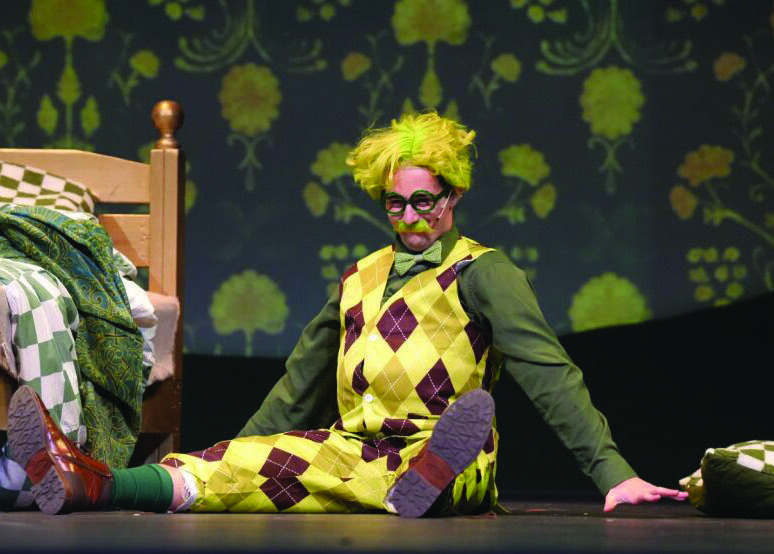
I was delighted by the Theatre Program’s performance of “The Wind in the Willows.” The talented actors, elaborate sets and humorous songs made for entertaining evening. The students and professors put much blood, sweat and tears into the performance and overcame a host of obstacles. Nevertheless, (with not a little trepidation) I would like to suggest emendation to the script by Fellowes, Drewe and Stiles.
At its core, whimsical “The Wind in the Willows” by Kenneth Grahame is a story about friendship, as the four friends, Mole, Rat, Toad and Badger, have many eclectic adventures. The musical adaptation of Grahame’s book preserves the theme of friendship, but the script slightly compromises the whimsical, lighthearted message of the original story, replacing the hopeful story of Toad’s redemption, with a cynical (but humorous) critique of the abuses of wealth.
In Grahame’s “The Wind in the Willows,” after a notable risk to their own lives to restore their foolish friend to his former estate of glory, Rat, Mole and Badger forbid a very reluctant Toad from giving any speeches or songs at his homecoming banquet. Toad mournfully complies, singing one final, boastful, but subdued solo alone in his bedroom before heading downstairs a different amphibian to greet his guests. He says not one word in praise of his own achievements.
Instead, in Julian Fellowes musical adaptation of “The Wind in the Willows,” the self-sacrificial friendship of Rat, Badger and Mole effects no change in Toad’s recklessness and arrogance, who ends the play by crashing an airplane and singing the reprise to “The Amazing Mr. Toad.” In the world of the musical, Toad’s wealth and pride are irreparable. Thus, the script neglects Toad’s reform.
These choices reflect other adaptations by these artists. Stiles and Drewe also collaborated on the 2004 musical “Mary Poppins” which also intersperses darker and more cynical themes within a more lighthearted children’s story. Julian Fellowes’ most famous work, “Downtown Abbey,” is a period drama and social commentary. Consequently, it is no surprise that Fellowes, Stiles and Drewe would make similar artistic choices in an attempt to make “The Wind in the Willows” entertaining for all ages.
Grahame did not write the world of “The Wind in the Willows” to evoke or critique a particular era. Yes, there are automobiles and mansions, reminiscent of the world before the Great War, but there is also a medieval dungeon and the Greek god Pan playing melodies on a pipe. The story is intentionally eclectic and playful, minimizing any darker themes.
However, in the Julian Fellowes adaptation, the Wild Wooders take a central and sinister role to the story, narrowly missing Rat and Mole, maliciously declaring Toad guilty, hungrily kidnapping Portia and defiantly declaring their right to Toad Hall. Their resentment of Toad’s prosperity, though adding nuanced motivation, introduces a broad critique of power and wealth absent in the original story.
Theater often engages in social critique, but effective criticism requires a concrete vision for world that is not bent and vain. The pastoral, the whimsical and the Edenic serve to create a longing for an unfallen and redeemed world. Thus, a musical “The Wind in the Willows” with the full childlikeness of the uncritical book ought to present a much-needed vision of true friendship in the face even of adversity and vice. A more whimsical “The Wind in the Willows” would have presented a clearer rebuke to human folly than the cynical social commentary of the Fellowes script.
The script and the performance were certainly humorous, and maintained some of the pastoral, idyllic and childlike joy of “The Wind in the Willows,” but by including satirical commentary and social critique, Fellowes, Stiles and Drewe compromised the message of “The Wind in the Willows.” The musical was funny and entertaining, but the message of enduring friendship withers in a world where riches, power and pride are irredeemable faults.
I was absolutely delighted by the Theatre Program’s decision to perform a musical adaptation of “The Wind in the Willows.” I thoroughly enjoyed and applauded their performance. However, I am saddened by a script that holds no hope for hardened fools and would rather laugh at human folly than rejoice in the hope of a mended wood.