
Inclusive tradition reduced to symptom of division
By Anna Kasianides · Contributing Writer
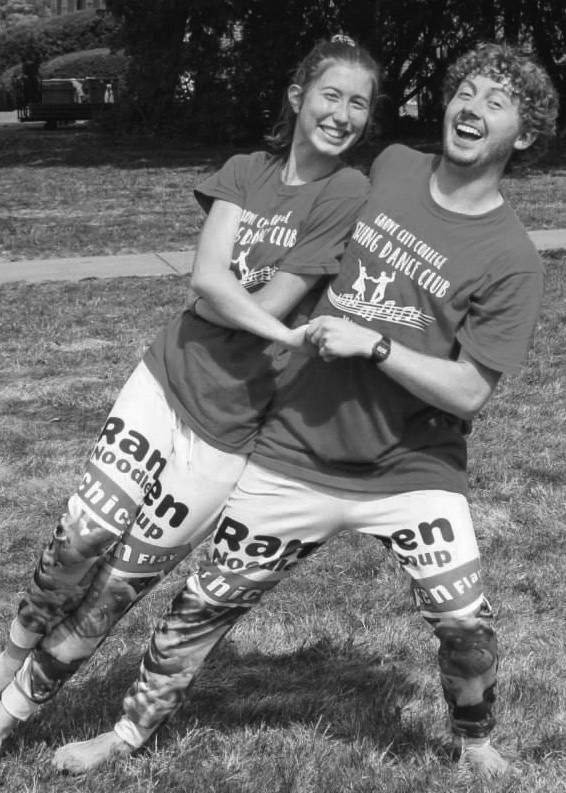
An article titled “Record Atten-dance” that was published in the previous edition of The Collegian reflects on the increased attendance records for swing and ballroom dancing, framing it as a social effort to restore healthy, platonic connections between men and women.
While the interpretation of the article raises a unique perspective, the increased attendance can be realistically explained by demographics and social factors in place of gender-based conflict.
The article started out by posing an interesting question about why traditional dancing is gaining popularity, but diverted instead to biased assumptions with no regard for evidence or historical accuracy.
The article argues that dances are a modern way to combat the “war of the sexes” and that feminism has “aged poorly,” morphing into a voice of male-hate, from which men naturally retaliate. The article also poses that young men and women are drifting apart politically, going so far as to say that “women are drifting left, and men are drifting right.”
Merriam-Webster defines feminism as “belief in and advocacy of the political, economic and social equality of the sexes expressed especially through organized activity on behalf of women’s rights and interests,” yet the article posits that it has since evolved into pure male-hate.
This unfounded speculation operates under the idea that select women act extremely and label it as feminism. That does not, however, define feminism as aligning with their personal thoughts and feelings. One cannot replace the definition of a concept with a personal opinion.
The political comment about women “drifting left” as opposed to men “drifting right” is also unsubstantiated. Broad generalizations about gendered political leanings do little to illuminate why students are joining dance clubs. Statements such as these shift attention away from the cultural and social reasons that more accurately explain the increase in attendance.
By emphasizing the division between sexes, the article ends up contributing to it, ignoring the efforts in which modern discourse has promoted mutual respect and equality among men and women. There is also a matter of historical inaccuracy surrounding how the article framed dance culture.
Ballroom and other social dances originally served as structured spaces for meeting potential romantic partners. The social reality was that men and women were placed in extremely strict and formalized public interactions. Traditional dances were not originally meant to facilitate platonic relationships; they were introduced to evaluate potential partners and signal interest.
The etiquette conducted during dances was strictly observed as systems of courtship, not friendship.
Therefore, the modern revival of ballroom and swing cannot be read as a place separated from romantic tension, but rather as a continuation of social traditions that have always blended formality, attraction and community. Instead of assigning the influx of interest surrounding ballroom and swing dancing to gender politics, a more likely contribution is the flood of freshmen students eager to participate in campus life, supplied by the new and exciting feeling it brings to the first semester.
For many, the motivation behind participating lies in curiosity, an eagerness for fun or even the hope of meeting a potential partner in a respectful setting that facilitates connection and enjoyment — not ideology.
The article’s argument ultimately rests on the idea that traditional dances have become a refuge from modern gender tension — a nostalgic return to structured, platonic interaction between men and women. Yet this interpretation mistakes cultural participation for ideological retreat. The increased attendance at swing and ballroom events stems not from rebellion against feminism or discomfort with modern social norms; it has arisen from students seeking connection, community and creativity within campus life.
By framing dance as a response to a supposed “war of the sexes,” Treadwell reduces a vibrant, inclusive tradition to a symptom of division. In truth, these gatherings thrive because they invite people to share in something joyful, expressive and human — values that transcend politics and remind us that dance, at its best, brings people together, not apart.