
New Church of England leader divides Anglicans worldwide
By Anastasia Brown · Foreign Correspondent
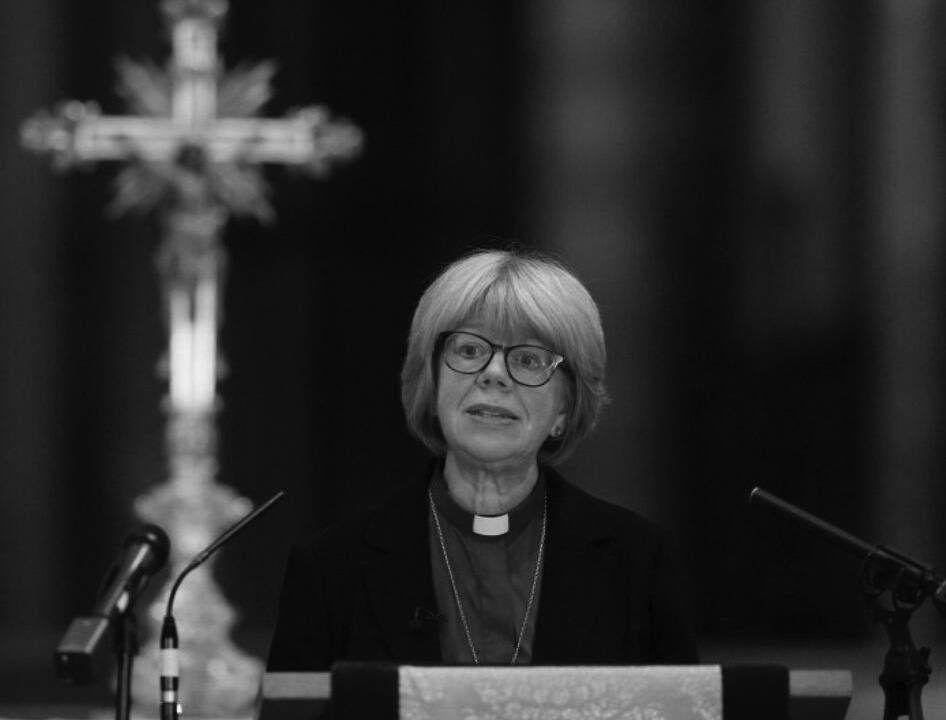
The Anglican church has recently made international headlines with the appointment of Dame Sarah Mullally as the Archbishop of Canterbury, making her the first woman to lead the Church of England.
This move has been hailed by some – including several members of the University of Oxford, whom I have heard speak on this topic – as evidence that the UK is “finally catching up.” The University of Oxford specifically sees itself as being primordially “behind the times.” Some colleges in Oxford didn’t permit female students until the early 2000s.
Now the campus has an active campaign to “catch up” with some mystical metric of progress. I could give a list of examples that I have already witnessed, from art choices in new university facilities to speaker lineups for public lectures. Perhaps because of its longing to “catch up” with the times, the consensus within British intellectual strongholds seems to be that Mullally’s appointment is a net-positive, simply on the grounds that she is a woman.
Of course, intellectuals are only one slice of the population. The Presbyterian church I have been attending in Oxford regularly prays for a reinvigoration of conviction within the leaders of “our state church.”
Internationally, many churches in the Anglican Communion have responded to this historic moment by reordering the “foundation” on which they base authority. Most notably, the Global Anglican Future Conference (GAFCON), which initially met in 2008, regathered this month to “prayerfully respond to the abandonment of the Scriptures by some of the most senior leaders of the Anglican Communion.”
The initial meeting of 2008 intended to encourage the Church of England to rethink “revisionist teachings” on topics such as marriage, sexuality, church leadership and Christ’s identity. The conference argued the Church of England undermined the gospel in their decisions and warned senior leaders in the Anglican Communion of their concerns.
The appointment of Dame Mullally was the final nail in the coffin. GAFCON declared they would reorder the Anglican Communion and reject the “Instruments of Communion, namely the Archbishop of Canterbury.”
“The Future Has Arrived,” GAFCON declared – a future that returned to historic Anglican principles. GAFCON’s new direction will be incredibly consequential – about 50% of churches in the Anglican Communion are led by GAFCON, including Grace Anglican in Grove City, and an estimated 80% of regular Anglican church attendees are attending those churches. A choice to step away from the authority of the Archbishop of Canterbury is a massive shift for the denomination.
Like any point of contention in church history, there is a valid concern about the discord and disunity growing within the global church. Our discord is aggravated by our cultural moment that, sadly, thrives best when fed with a steady diet of contention.
With the ambition to maintain church unity while also remaining consistent with their interpretations of Scripture, many parochial church councils (PCCs) of conservative-leaning Anglican churches have passed resolutions under the “House of Bishop’s Declaration on the Ministry of Bishops and Priests.”
These declarations solidify, as a congregation, their personal teachings on these topics, allowing the church to break with the official doctrine of the Church of England without leaving the general Anglican Communion.
The arrangements are based on “Five Guiding Principles,” which stress that the Church of England has reached a clear decision on all orders of ministry being equally open to both sexes, but at the same time recognizes and wishes to accommodate those who disagree, as their position remains recognizably Anglican.
The aim is to enable mutual flourishing across the whole Church of England. This is a historically unique way to approach moments of division – but at what cost of compromise?
Much more ink could be spilled in support or condemnation of either side of this coin, but the goal for all churches in the Anglican Communion after these unprecedented changes should be a careful reconsideration of their priorities and a revival in claiming the ultimate authority of Scripture.
That “sola scriptura” ideal hearkens back to the Protestant Reformation and the early years of the Anglican Church. In fact, the GAFCON meeting was notably held on the anniversary of the martyrdom of prominent Reformation-era Anglican church leaders Hugh Latimer and Nicholas Ridley during the reign of Bloody Mary.
Their refusals to back down from conviction in the face of the greatest pressure set a precedent that GAFCON secretary Paul Donison highlighted in his assessment of current events. The part of the story he skips is that a third man was also burned at the stake with Latimer and Ridley in the center square of Oxford – and that was the Archbishop of Canterbury, Thomas Cranmer, who established many of the first liturgical structures of the Church of England.
It is understandable why many Anglican churches still seek paths that would maintain unity and a historic tradition, thus combating the spirit of dissention that characterizes our age. But the appointment of Dame Mullally must not be taken lightly and should be the catalyst for further discussions about the future of the Anglican Communion.